Deep Dive
Cast Iron Pipes in South Florida Homes: Repair, Line, or Replace?
If your house went up between the 1950s and mid-1970s, the drain lines under your slab are almost certainly cast iron — and after decades in Broward's soil, they're on borrowed time. Here's how to read the symptoms and choose the right fix.
The 1975 line
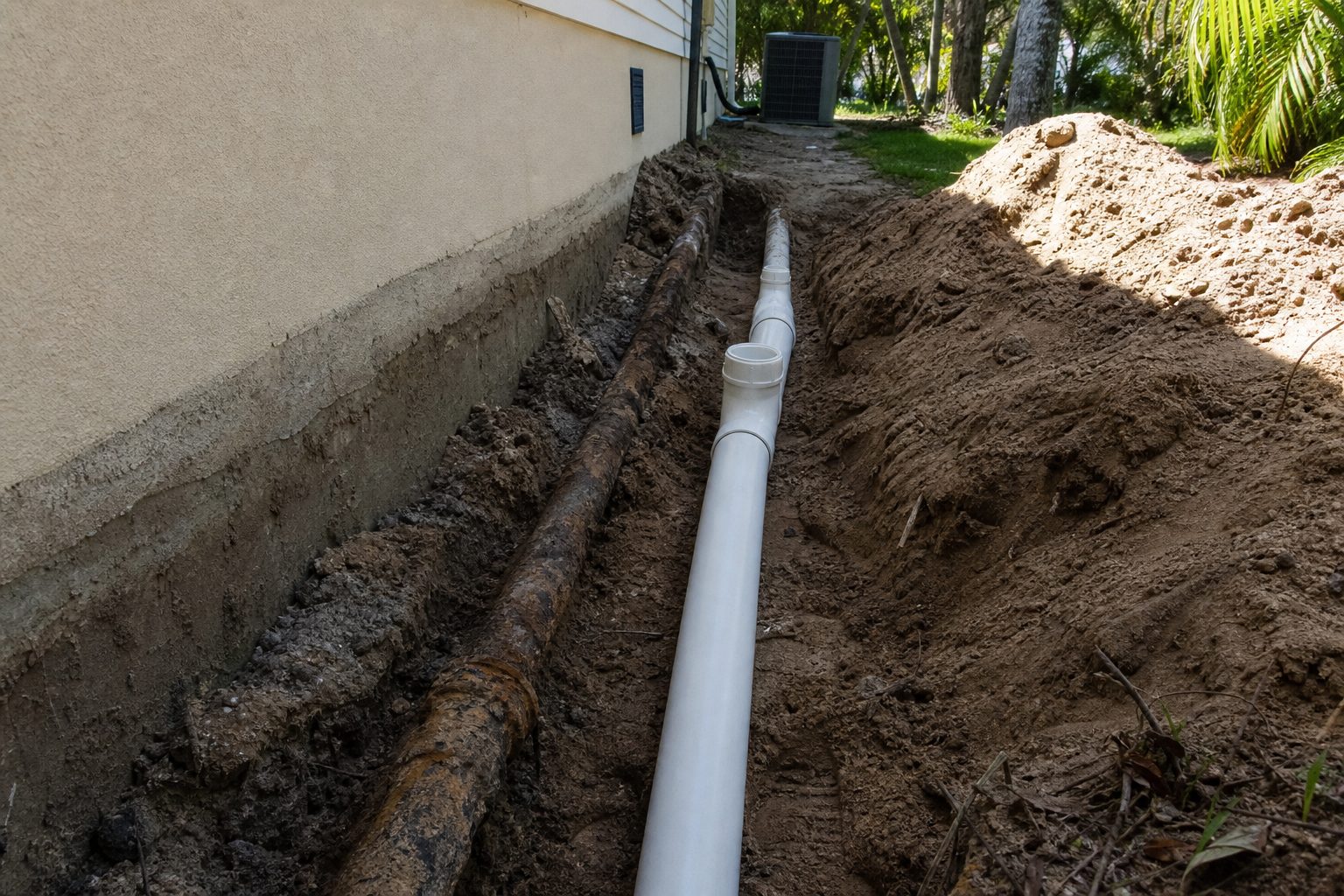
Walk into almost any pre-1975 home in Fort Lauderdale, Hollywood, or Plantation and you'll find the same thing buried under the slab: heavy cast iron drain and waste pipe. It was the standard for a reason — it was strong, quiet, and fire-resistant, and at the time it looked like it would last forever. Builders across Broward County poured slabs right over it and moved on.
"Forever" turned out to mean roughly 50 to 60 years. Most of those homes are now well past that window, which is why cast iron drain problems have become one of the most common calls we take in older neighborhoods.
Why South Florida is especially hard on cast iron
Cast iron fails everywhere eventually, but our conditions accelerate it. The pipe corrodes from the inside out. Sewage, cleaning chemicals, and constant moisture eat away at the bottom of the pipe first — a process called channeling, where the floor of the pipe rusts through while the top still looks intact on a camera.
On top of that, a high water table and sandy, shifting soil keep the exterior of the pipe wet year-round. Scale builds up on the inner walls, narrowing the pipe until a line that started at four inches carries water through an opening the size of a garden hose. And every joint underground is an invitation to tree roots hunting for moisture.
The three ways cast iron gives out
- Channeling — the bottom of the pipe corrodes away, letting waste seep into the soil under your slab.
- Scale buildup — decades of mineral and rust deposits choke the flow and snag debris, causing repeat clogs.
- Root intrusion at joints — feeder roots slip into loosened hubs, then swell until they crack the pipe outright.
The symptoms owners actually notice
Almost nobody calls us because they "think the cast iron is done." They call because of what the failing pipe is doing to daily life. If you own an older home, watch for these:
- Recurring backups in the same tub, floor drain, or toilet — even right after you've had it snaked.
- A persistent sewer smell that comes and goes, especially in a bathroom or near the slab.
- Roaches or drain flies showing up out of nowhere — they follow cracks in the sewer line.
- Slow drains throughout the house at once, not just one fixture.
- A lush green patch of grass or a soft, sinking spot in the yard over the line.
- Cracked or lifting floor tile above the slab where soil has washed out beneath it.
Several of these overlap with plumbing you can see, so it's worth learning the broader warning signs of a hidden water leak too — the two problems often show up in the same aging house.
The one test that settles it: a camera inspection. We run a fiber-optic camera through the line and watch it in real time — no guessing, no exploratory digging. It shows exactly where the channeling, scale, or root intrusion is and how much healthy pipe is left. Book one through our diagnostic team before you commit to any repair.
What the camera shows you
The footage is what turns "I think" into a plan. A short section of scale on an otherwise sound line is a very different situation than a pipe that's channeled and separated in four places. We map the whole run so you know whether you're dealing with one bad spot or a system that's tired end to end. That distinction drives everything below.
The options ladder, cheapest to most permanent
There's rarely one right answer — it depends on how much good pipe the camera found and how long you plan to stay. Here's how the choices stack up.
1. Hydro jetting — buy time
If the pipe walls are still structurally sound but choked with scale and grease, high-pressure hydro jetting scours them clean and restores flow. It won't fix a channeled or cracked pipe, but it can end recurring backups and buy you a season or two to plan. Think of it as maintenance, not a cure.
2. Spot repair — one bad section
When the camera finds a single failed joint or a short cracked run and the rest checks out, a targeted sewer line repair replaces just that section. It's the least invasive real fix and makes sense when the damage is localized and the surrounding pipe has years left.
3. Trenchless lining — rebuild without demolition
If the line is failing along its length but the pipe still holds its shape, trenchless sewer repair cures a new pipe-within-a-pipe inside the old cast iron. No jackhammering your floors or tearing up the yard. It's the middle path — far more durable than jetting, far less disruptive than a full dig.
4. Full replacement — the permanent answer
When channeling is widespread, the pipe has lost its shape, or multiple sections have separated, lining isn't an option. Cast iron pipe replacement swaps the old system for modern PVC. Yes, it means opening the slab — but you finish with a drain system engineered to outlast you, and the problem never comes back. For homes on original piping throughout, pairing it with whole-home repiping is worth discussing.
The insurance angle you can't ignore
This is the part catching Broward homeowners off guard: insurers are increasingly non-renewing policies on homes with original cast iron drain lines, or excluding them from coverage. A camera report showing you've addressed the plumbing — or a receipt for replacement — can be the difference between keeping a policy and scrambling for a new carrier. If you've gotten a nervous letter from your insurer, dealing with the pipe proactively is now a financial decision, not just a plumbing one.
Not sure where your home falls? Call us at (954) 417-4662 and we'll schedule a camera inspection. You'll see the footage yourself and leave with a clear recommendation — repair, line, or replace — no pressure.
Cast iron did its job for half a century. The homes that age gracefully are the ones whose owners caught the warning signs early, inspected before an emergency forced the issue, and chose the fix that matched the actual damage — not the worst-case fear or the cheapest patch.
Keep reading
More from our plumbing library to help you diagnose an aging South Florida home.
Pillar
The Emergency Plumbing SFL Blog
Guides on drains, leaks, water heaters, and living with older Broward plumbing.
Browse allRelated
7 Signs You Have a Hidden Water Leak
The symptoms that overlap with failing pipes — and how to tell them apart.
Read moreService
Cast Iron Pipe Replacement
The permanent fix for channeled, root-cracked drain lines under your slab.
See serviceService
Trenchless Sewer Repair
Rebuild a failing line from the inside — no torn-up floors or yard.
See serviceGet a straight answer
Camera inspection first, decision second.
(954) 417-4662Licensed & insured — CFC1433655 · Serving Broward & South Florida