Field Guide
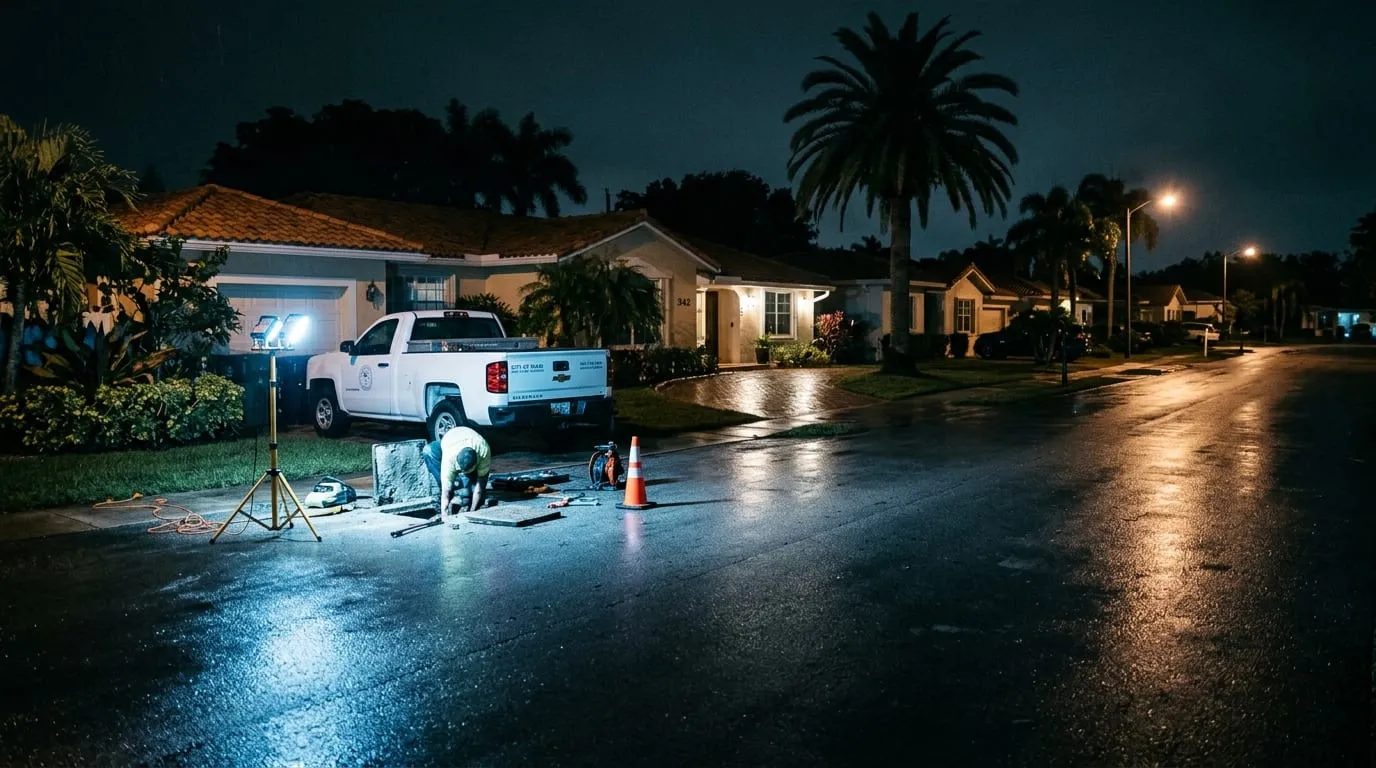
Water moves fast. Panic moves faster. This is the calm, practical playbook for the moment a pipe bursts, a drain backs up, or the water heater gives out: written for the humidity, the slab foundations, and the aging cast iron under Broward County homes.

Before anything else
Almost every plumbing disaster gets smaller the second you stop the flow. Before you grab a bucket, before you call anyone, know where your water shutoff is, and know itbefore the ceiling starts dripping. In South Florida, most single-family homes on a slab have a main shutoff valve near where the water line enters the house: check the front exterior wall, often close to the garage or an outdoor hose bib, roughly hip height. Turn it clockwise until it stops.
If you’re on municipal water, there’s also a curb stop at the meter box near the street, usually a rectangular concrete or plastic lid in the front yard. A meter key (a cheap L-shaped tool) turns the valve a quarter turn. For a single fixture, use the small angle stops under the sink or behind the toilet. Learn these locations on a calm Tuesday, not during a 2 a.m. flood.
The one-minute drill:Walk your house today. Touch the main valve. Touch each fixture stop. If a valve is corroded shut or spins without resisting, that’s a repair to schedule now, not a discovery to make mid-emergency. When you find one frozen, a quickemergency plumbing visit beats an unplanned lake in the living room.
Some problems can wait for a weekday appointment. These five cannot. If you’re seeing any of them, kill the water, protect your family, and call. Our line is (954) 417-4662, answered around the clock.
A burst supply line can push hundreds of gallons through a house in under an hour. Shut the main valve immediately, open a low faucet to drain the pressure, and move electronics and rugs out of the path. Copper and CPVC both fail at joints and thin spots; the older the pipe, the higher the odds. This is exactly why we push homeowners toward preventive leak detectionCatching a weeping joint at 3 a.m. is a crisis. Catching it on a scheduled scan is a Tuesday.
If dark water rises in a floor drain, tub, or lowest toilet, especially when you flush or run the washer, your sewer line is blocked or failing. This is a health hazard, not just a mess. Stop running water everywhere in the house and don’t use fixtures. Broward’s clay and cast iron laterals are prone to root intrusion and collapse; sometimes it’s a clog we clear, and sometimes it’s a line that needstrenchless sewer repair. Either way, keep everyone away from the contaminated water.
Total loss of water is sometimes the utility’s doing, so check with a neighbor. But if it’s just your house, look at the main valve (did someone bump it?), the pressure regulator, or a burst line that’s dumping supply somewhere you can’t see. Sudden pressure loss combined with a running meter dial means water is escaping. If the meter spins with every tap shut off, you almost certainly have a hidden leak or aslab leak and need a locate before more damage stacks up.
A leaking gas water heater is two emergencies in one: water damage and a combustion hazard. If you smell gas (rotten eggs), do not flip switches or light anything: leave, then call the gas utility from outside. For a water leak from the tank itself, shut the cold-water inlet valve on top of the heater and turn the gas control to “off” or “pilot.” A tank that’s pooling water at the base is usually done, and a same-daywater heater replacement is the safest fix rather than nursing a rusted-through unit.
South Florida’s slab foundations hide the water lines running beneath your floor. A slab leak announces itself with a warm spot on the tile, the sound of running water with everything off, unexplained mildew, or a water bill that jumps for no reason. Left alone it undermines the slab and grows mold. Precision leak detectionpinpoints it without jackhammering the whole floor: the difference between one targeted repair and a demolished living room.
The 15 minutes that save your floors
Once you’ve called, the clock between your phone hanging up and our truck arriving is when you protect the house. Work the list, calmly:
Don’t pour drain chemicals into a backed-up line hoping to force it. Caustic products sit on top of a full trap and can burn a plumber (or you) when the line finally opens. For a stubborn stoppage, professionaldrain cleaning or hydro jetting clears the pipe without the risk. And keep the phone handy: we’ll often coach you through stabilizing the situation while we’re en route at (954) 417-4662.
The systems behind your walls
You defend a house better when you understand what it’s made of. Four systems cause the vast majority of South Florida plumbing calls, and each ages in a predictable way. Knowing their tells turns you from a victim of surprise floods into an owner who catches problems early.
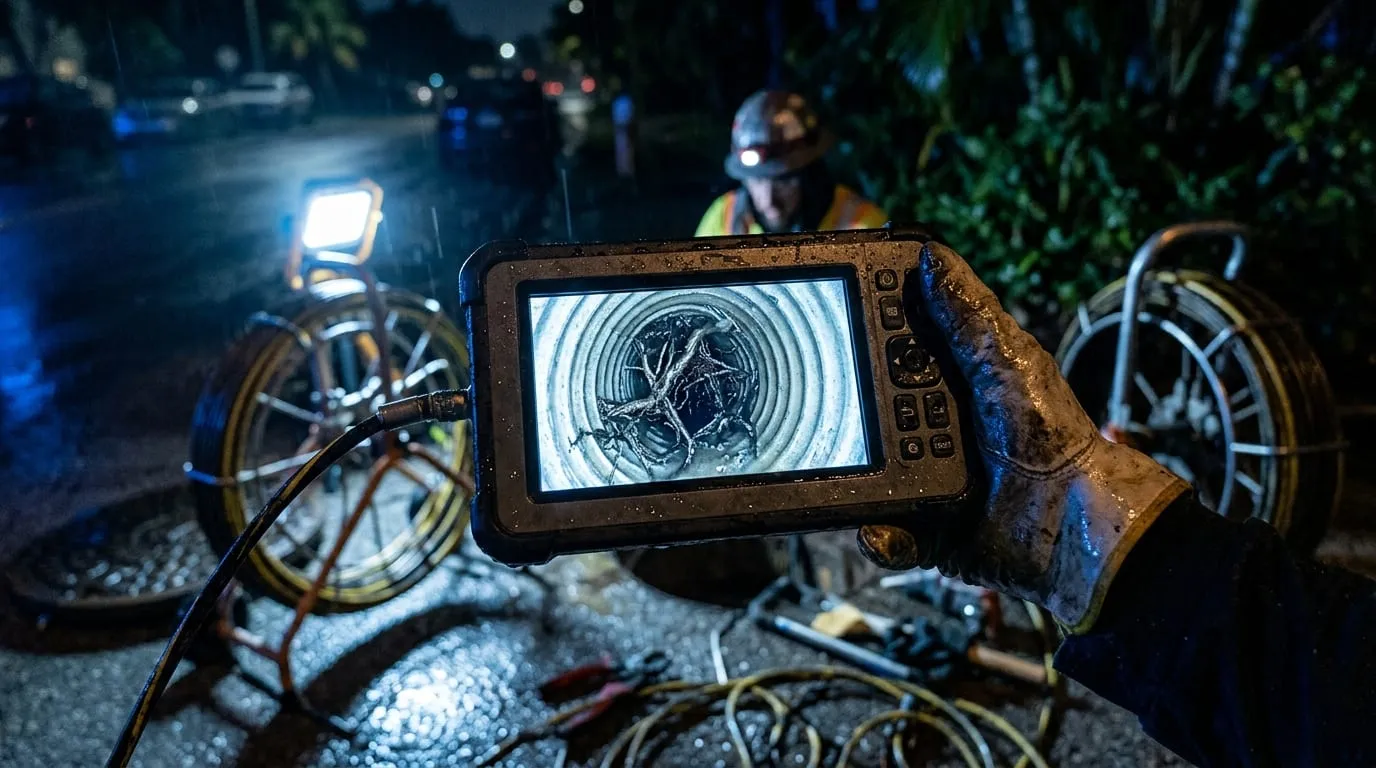
Drains rely on gravity and clear pipe. Grease, hair, mineral scale, and, outdoors, tree roots narrow the passage until water backs up. Slow drains throughout the house point to a main-line issue, not a single clog. Recurring backups usually mean roots or a bellied pipe that traps debris, which is wherehydro jetting or camera inspection earns its keep. If you’re fighting the same drain clog every few weeks, the pipe itself is telling you something.
Tank heaters in our humid, hard-water region collect sediment that insulates the burner, robs efficiency, and rusts the tank from inside. Popping or rumbling sounds, rusty hot water, or a longer wait for heat are early warnings. Most tanks give 8–12 years; pushing well past that is how you end up with a flooded garage. Weigh a repair against a replacementhonestly, dumping money into a corroded tank rarely pays off.
Countless Broward homes still run original cast iron drain and sewer lines. Over decades the interior scales, cracks, and channels: the pipe literally rots from the inside out. Symptoms include sewer smells, recurring backups, and stains bleeding through slab floors. When a system reaches that stage, spot repairs only buy months; a plannedcast iron pipe replacement restores the house properly and ends the cycle of emergencies.
Not every leak floods. The dangerous ones drip quietly inside walls and under slabs, feeding mold and eroding structure for months. Watch your water bill, listen for phantom running water, and note any warm or persistently damp spots. A rising meter with every fixture off is proof. Professional acoustic and thermal leak detection finds these before they become the kind of repair that closes off a room.
Bottom line:Learn your shutoffs, respect the five emergencies, and treat early warnings as invitations, not annoyances. When you do need us, we answer 24/7 across Broward County. Keep(954) 417-4662 in your phone, and browse the field guides below to go deeper.
Four field guides that unpack the problems most South Florida homeowners face: diagnosis, cost, and what to do next.
Guide 01
The silent leak that wastes gallons a day: how to spot it and stop it.
ReadGuide 02
Bills, stains, and sounds that mean water is escaping where you can’t see it.
ReadGuide 03
Repair vs. replace, tank vs. tankless, and what actually drives the price.
ReadGuide 04
Why old Broward drain lines fail, and when replacement is the smart call.
Read24/7 Emergency Line
Emergency Plumbing SFL Inc · Broward County, FL · License CFC1433655