
Answered 24/7 · cleared, then explained
Drain cleaning, and an answer about whether it will come back
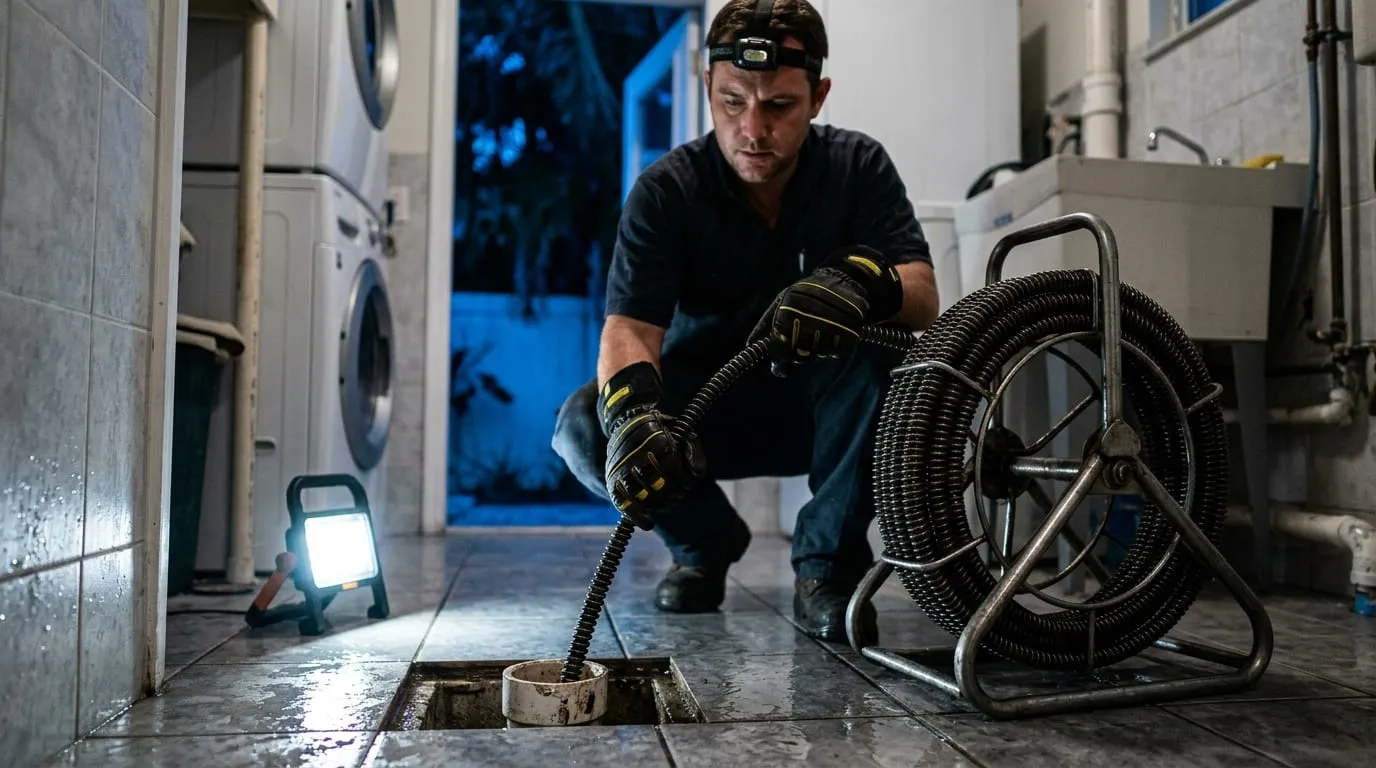
The line is cleared first because that is what you called about, and then the question of why it closed gets answered, because those are two different pieces of work and only one of them is usually done.
Is a slow drain a fixture problem or a pipe problem?
Count the fixtures. If one basin, one shower or one toilet is slow and everything else is fine, the restriction is local to that fixture and its trap, and clearing it is the whole job. If several fixtures are slow or backing up at the same time, particularly the lowest ones in the building, the restriction is in the line they share and the fixture is only where you are noticing it.
That distinction changes both the tool and the price. A local blockage is a cable job. A shared line that has lost diameter is a camera question first, because in a South Florida house built before about 1975 the drain is cast iron, and a rough, scaled bore catches what should pass.
So the honest version of drain cleaning has two parts: clear it now, and say whether the pipe or the blockage was the cause. Only the second part tells you whether you will be calling again.
What you are seeing
What each pattern is actually telling you
The pattern matters more than the severity.
One fixture, slow
Local. Hair, soap or food in the trap or the branch that serves it, and clearing it is genuinely the end of the job.
Several fixtures at once
The shared line. The lowest fixture in the building is where it shows first, which is why a shower or a floor drain often reports a problem that is not theirs.
The same drain, on a schedule
A recurring interval means the last clearing treated the blockage and left the cause. Something is narrowing the line between visits.
Gurgling from another fixture when you drain one
Air being pulled through a trap because the line cannot breathe. That is usually a vent or a partial blockage further along rather than the fixture making the noise.
Smell without a blockage
A dry trap or a failed seal letting sewer gas back into the room. Different problem, and pouring drain cleaner at it does nothing.
Questions
Straight answers before you call
Should I use a chemical drain cleaner first?
We would rather you did not, particularly in older cast iron. It sits on the blockage rather than removing it, it is still there when someone opens the line, and on pipe that is already thinned from the inside it is working on the pipe as well as the clog.
Why did the same drain block again?
Usually because the clearing made an opening through the blockage rather than restoring the pipe. If the line is coated with grease or the bore is rough with scale, the diameter is still reduced and it closes again on its own timetable.
Do I need a camera every time?
No. For a single slow fixture that is a waste of your money. For a second or third clearing of the same line, it is the cheapest thing you can do, because it is the only way to stop paying for the same visit repeatedly.
Is a clog an emergency?
One slow fixture is not. Sewage coming up inside the building is, and the useful first move there is to stop using water anywhere on the property, because every further flush adds to what has nowhere to go.
Related work
Where a drain call usually goes next
Clearing is the start of the conversation more often than the end.

Live dispatch · 24 / 7 / 365
Draining slowly, or not at all?
A person answers at any hour. Tell us how many fixtures are affected, because that one answer decides most of the rest.
No obligation. Work performed under Florida plumbing contractor license CFC1433655.