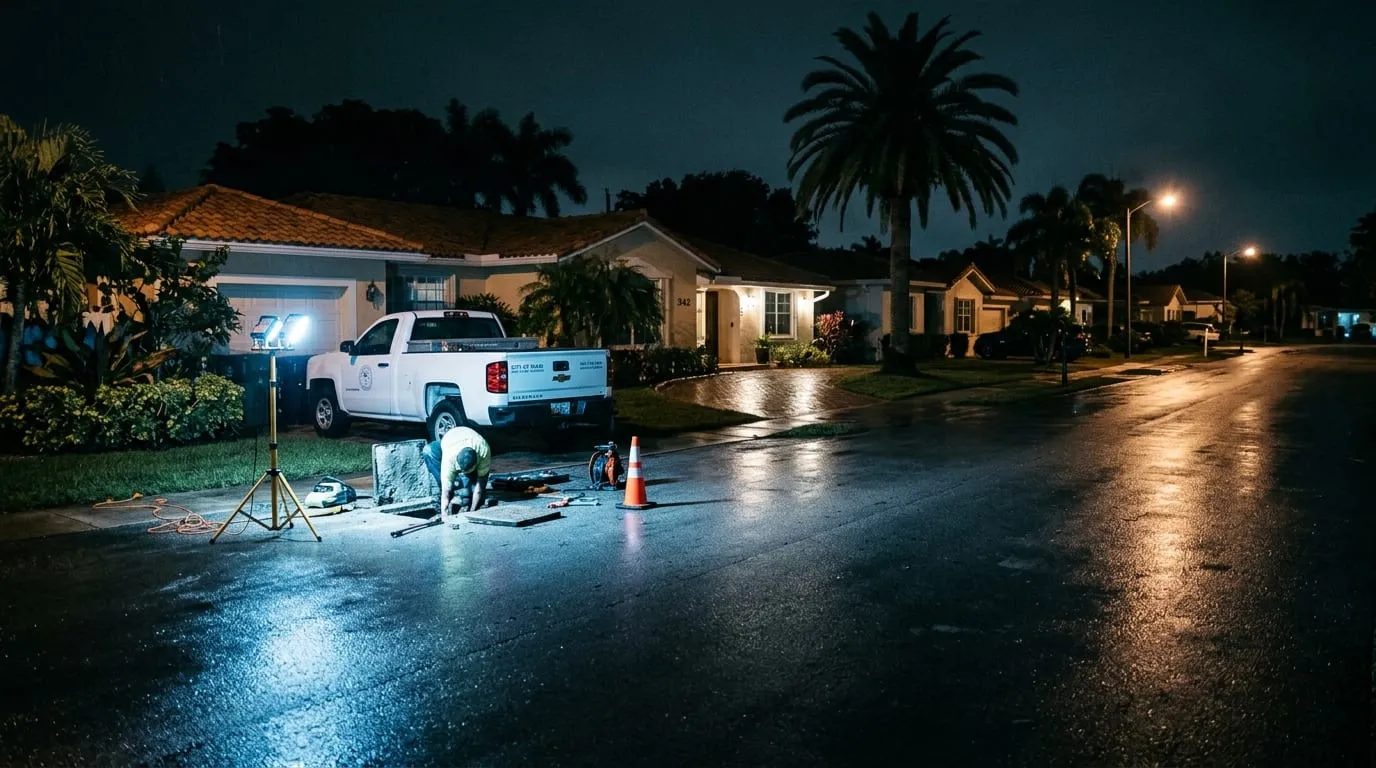
Around 800 listed structures
Most built between 1923 and 1943, in the first twentieth-century neighborhood ever added to the National Register. Housing that old predates copper as the default supply material.
Miami-Dade County · line answered right now
Dispatch takes the address and the building, notes whether it sits in the Architectural District, and routes a plumber who expects 1930s material and a preservation review beside the permit.
What is different about plumbing on Miami Beach?
Age and altitude, in that order. The Art Deco Historic District was the first twentieth-century neighborhood placed on the National Register of Historic Places, and it holds around 800 structures of historical significance, most of them built between 1923 and 1943. That is a whole city of buildings that predate the modern plumbing code, and a great many of them are still on the material of their era.
Then the ground, which is barely ground. The city averages about 4.4 feet above mean sea level and parts of South Beach are at virtually zero, which is why it floods on high tides rather than only in storms. Water leaving a line under a slab here has nowhere to drain to, and salt reaches everything from every direction.
The third factor is procedural. Work inside the Architectural District runs through the Historic Preservation Board alongside the building department, and the whole city sits in a High Velocity Hurricane Zone, which changes what products are acceptable.
What is under these buildings
The building tells you the decade, and the decade tells you the pipe.
Most built between 1923 and 1943, in the first twentieth-century neighborhood ever added to the National Register. Housing that old predates copper as the default supply material.
The Art Deco stock largely dates from the 1930s and 1940s, put up after the storm that flattened what came before it. That is a single, tight cohort of buildings now approaching a century.
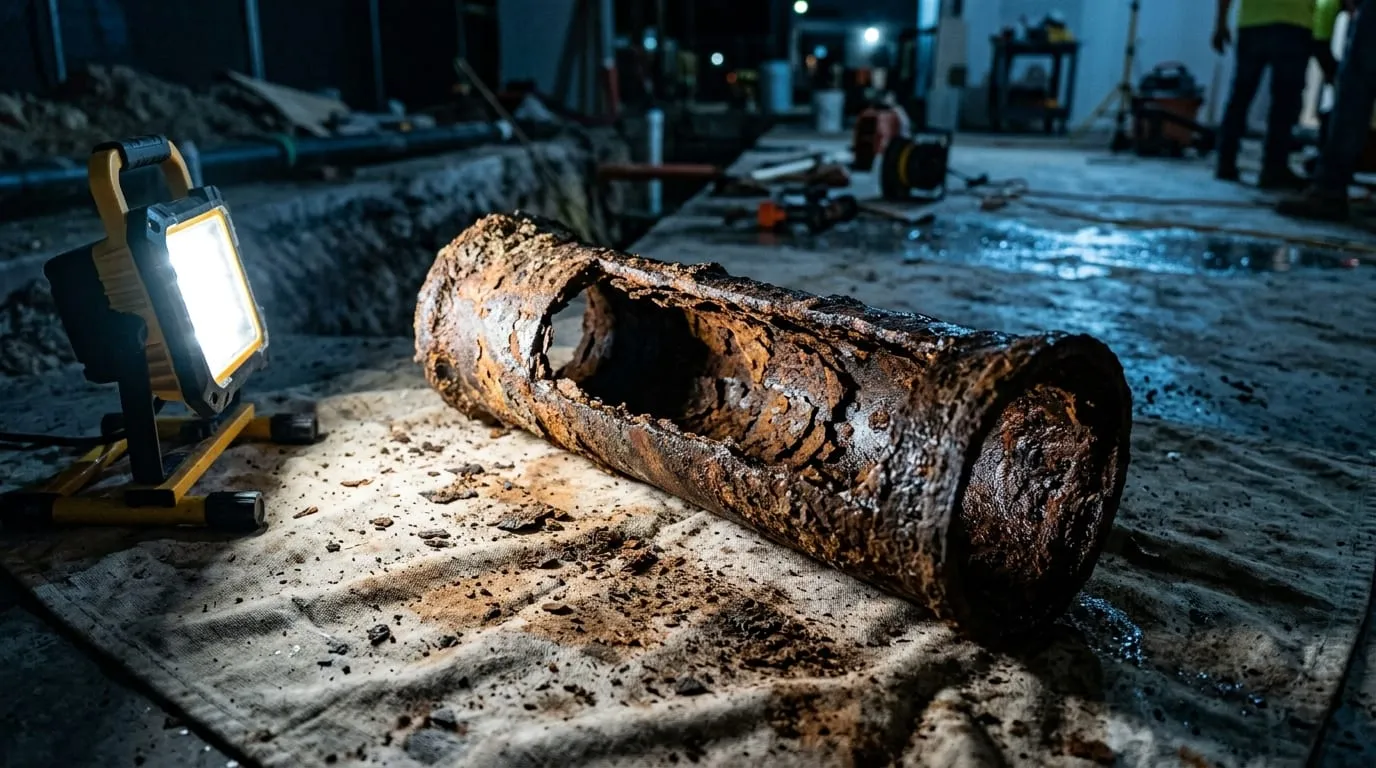
Collins Avenue carries 1940s and 1950s mid-century modern, and parts of North Beach are Miami Modern. Later cohorts, and squarely the cast iron era rather than the galvanized one.
The city averages about 4.4 feet above mean sea level with parts of South Beach at virtually nothing, so tidal flooding is a routine condition rather than a storm event.
The Haulover Cut connected the ocean to the bay in April 1925. Salt on both sides of a 7.69 square mile strip is why copper here corrodes from the outside as well as the inside.
How it fails here
Old material, shared pipe, and salt water on both sides.
In pre-war buildings the supply is old enough to be galvanized steel, closing from the inside rather than bursting. There is no day it broke, and every tap drops together rather than one.
Compare pressure at the meter and at a tap.
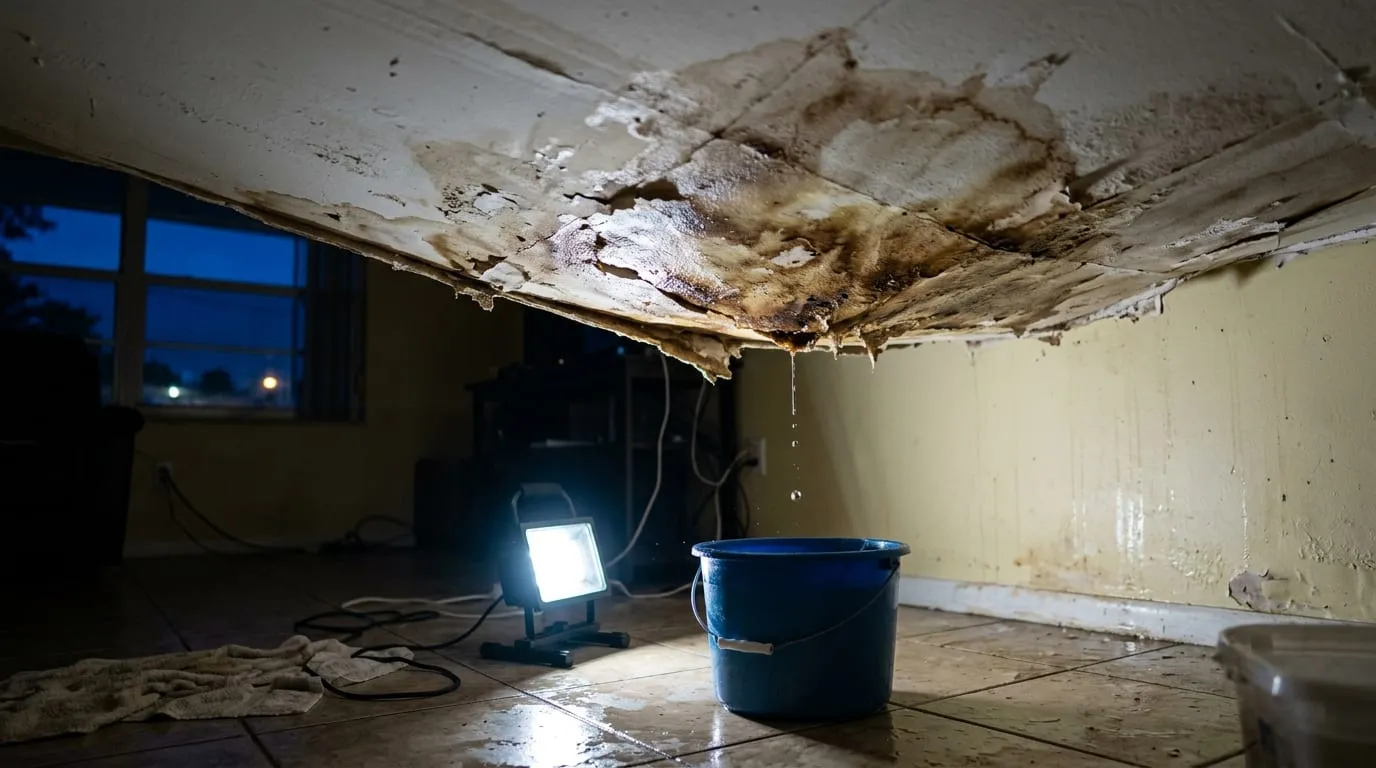
RepipingIn a multi-unit building the pipe that failed is usually a shared stack or riser rather than your unit, so the apartment reporting the water is often not the one with the fault. That decides who pays before it decides what gets repaired.
Note the time and tell the building.
Leak detectionIn the Architectural District the building department and the Historic Preservation Board review in parallel. Interior pipe work is usually straightforward; anything that changes the outside is a different conversation and a longer one.
Check the district before scheduling.
Cast iron replacementWhere we work
The section of the island is a reliable guide to the decade.
The southernmost 2.5 square miles, holding most of the 800 listed structures built between 1923 and 1943, where a plumbing permit runs in parallel with historic preservation review.
Mid-century modern from the 1940s and 1950s, which is the cast iron drain era rather than the Deco one, and where recurring clogs are usually the pipe reporting itself.
Miami Modern architecture and a later cohort again, on the same zero-elevation ground, where the water table is close enough that an escaping slab leak travels before it surfaces.
Who owns what
Two reviews and a hurricane zone.
Reviews
Real reviews from the company’s own Google Business Profile, quoted with the reviewer’s public name.
77of the 77 reviews captured from the profile are five stars, and none is below five.
Read straight from the Google Business Profile on August 20, 2026. Counted, not estimated.
Open the Google profileMike came and save me the day he replaced my waterheater after It was flooded all over thanks God there is emergency plumbing SFL BIG RECOMANDATION

Moti gave exceptional service ! He arrived quickly and was done less than an hour ! Will use this company again

Had a really slow drain in my bathroom and it was driving me crazy. The guy who came out was super chill and found a bunch of hair and gunk clogging it up. He cleared it out in like 20 minutes, and now it’s draining faster than before! …
Questions
Galvanized steel supply is a genuine possibility alongside cast iron drains, and after ninety years there will usually have been partial repairs by several different hands. A camera and a pressure reading answer it faster than the building age does.
It can. Work inside the Architectural District runs through the Historic Preservation Board alongside the building department. Interior pipe work is usually simpler than anything that changes the appearance of the building, and knowing which one you are doing early is what protects the timeline.
Because the city averages about 4.4 feet above mean sea level and parts of South Beach are at virtually zero. Tidal flooding here is a routine condition rather than a storm event, and it changes how an existing leak behaves rather than causing one.
In a multi-unit building, usually not yours. Water travels down, so the source is commonly the unit above or a shared riser, and in a building that is the association’s line. Establishing that first is what keeps the right people paying.
Nearby
All of them are across water from here.
Live dispatch · 24 / 7 / 365
A person answers at any hour, works out whether the pipe is yours or the building’s, and routes a plumber to the address.
No obligation. Work performed under Florida plumbing contractor license CFC1433655.