TrenchlessSewer Repair
Fix a failing sewer line without ripping up your driveway, pavers, or mature palms. We rebuild pipes from the inside using CIPP lining and pipe bursting — usually through a single access point across Broward, Miami-Dade, and Palm Beach.

Signs your line is a candidate
Recurring Root Intrusion
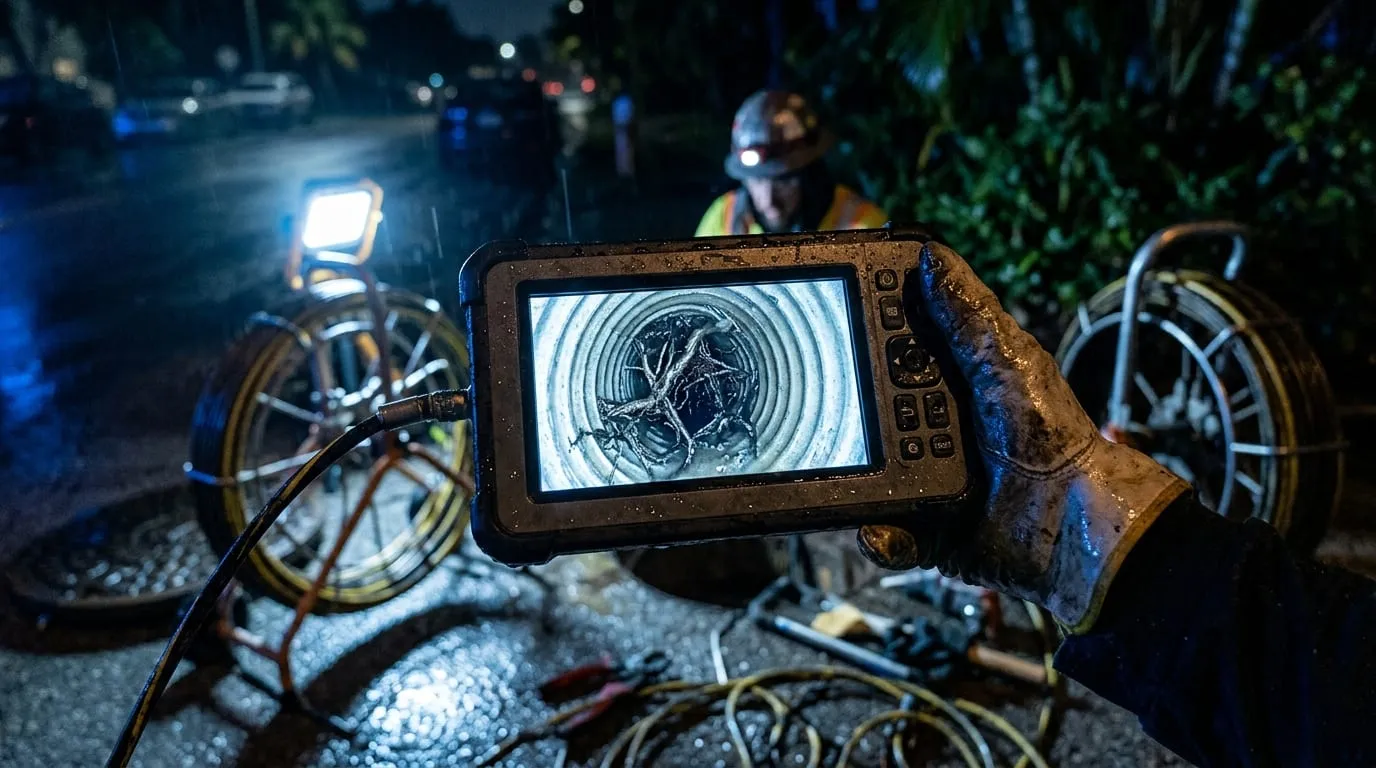
If you cable the line every few months and roots keep returning through cracked joints, a cured-in-place liner seals those entry points for good.
Cracked or Corroded Pipe
Camera footage showing longitudinal cracks, flaking cast iron, or offset joints — but a pipe still holding its shape — is ideal for relining rather than digging.
Line Runs Under Hardscape
When the sewer travels beneath a paver driveway, a screened pool deck, or decades-old ficus roots, open excavation costs far more in restoration than the pipe repair itself.
Chronic Slow Drainage
Multiple fixtures draining sluggishly and gurgling at once often means the main lateral has scale buildup or a partial collapse we can address without a trench.
When Trenchless Won't Work
A fully collapsed pipe, a severe belly holding standing water, or a line that has lost its host shape can't be lined or burst. We tell you honestly when a spot dig is the right call.
Failed Inspection Report
A buyer's sewer scope flagged your lateral before closing. Trenchless rehab restores the line and gives you documentation without tearing up curb appeal.
Two ways to fix a pipe from the inside
CIPP structural lining pulls a resin-saturated felt sleeve into the existing pipe. We inflate it against the walls, cure the resin, and it hardens into a jointless pipe-within-a-pipe. Because the liner bridges cracks and seals joints, it stops root intrusion permanently while the host pipe stays right where it is. Pipe bursting takes a different route: a bursting head is pulled through the old line, fracturing it outward while simultaneously dragging a new seamless HDPE pipe into the void. Bursting is the answer when the original pipe is too far gone to line or when you want to upsize a badly undersized lateral. We choose the method after a camera inspection tells us the pipe's true condition — never before.
How a trenchless job runs
Camera Inspection & Locate
We push a self-leveling camera through a cleanout and locate the exact depth and position of every defect. This footage decides whether lining, bursting, or a targeted dig is correct.
Clean & Prep the Host Pipe
Before any liner goes in, we hydro-jet out scale, grease, and root mass so the resin bonds to a clean interior wall. Skipping this step is why cut-rate liners fail early.
Establish One Access Point
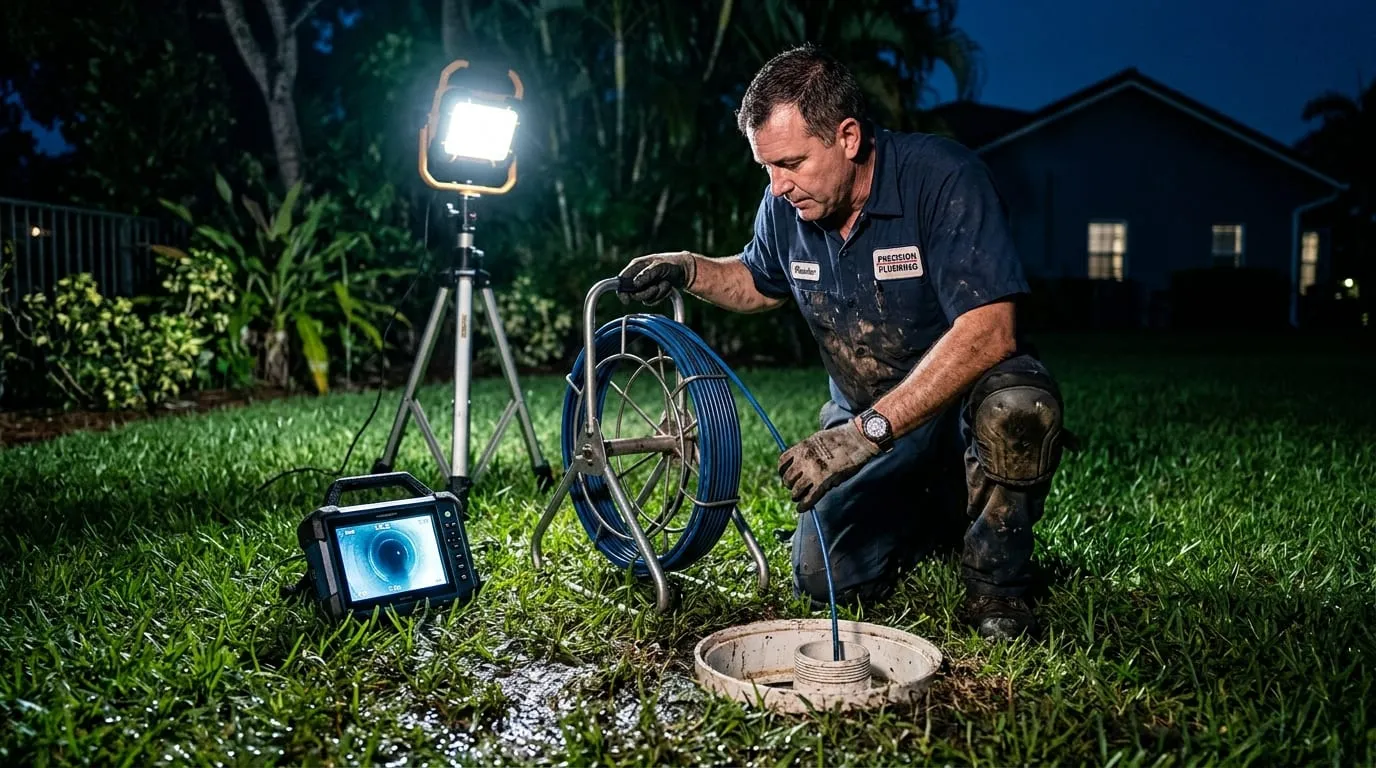
Most South Florida laterals only need a single access pit at the cleanout or a small excavation at one end — no continuous trench running the length of your yard.
Install Liner or Burst
For CIPP we invert or pull the saturated liner into place and inflate it; for bursting we winch the head through and draw new HDPE behind it. Either way, the new pipe forms inside the old path.
Cure & Reinstate
Ambient, hot-water, or UV curing hardens the resin. We then reopen any branch connections robotically and let the pipe set to full structural strength before returning it to service.
Final Camera & Warranty
A post-job camera pass confirms a smooth, sealed, full-bore pipe. We hand you the footage and a written warranty on parts and labor before we leave.
The factors that move a quote
No two laterals are alike. We never quote sight-unseen, but these are the variables that shape a trenchless estimate.
- Length and diameter of the run — a short 4-inch kitchen lateral is far simpler than a long 6-inch main to the city tap.
- Method required — CIPP lining and pipe bursting carry different material and equipment costs depending on pipe condition.
- Depth and access — a deep line under a slab-on-grade foundation or a hard-to-reach cleanout adds labor.
- Number of branch connections — each tie-in that must be robotically reinstated after lining takes extra time.
- Pre-cleaning severity — heavy scale in old cast iron or dense root balls demand more jetting before install.
- Permits and municipal requirements — some Broward and Miami-Dade jurisdictions require inspection sign-off on lateral work.
Three counties, no-dig crews
Broward
- Fort Lauderdale
- Hollywood
- Pompano Beach
- Coral Springs
- Plantation
- Davie
Miami-Dade
- Miami
- Aventura
- Hialeah
- Miami Beach
- Doral
- Kendall
Palm Beach
- West Palm Beach
- Boca Raton
- Delray Beach
- Boynton Beach
- Jupiter
- Wellington
Yards saved, pipes rebuilt
"We were terrified they'd tear out the paver driveway we just laid. They lined the whole lateral through one cleanout and never touched the pavers. Camera footage before and after was night and day."
"Roots kept coming back every rainy season. The old cast iron was cracked at three joints. They burst the line and pulled in a new HDPE pipe. Done in a day and a half, and the mango tree stayed put."
"Honest crew. Another company wanted to line a section that had a bad belly. These guys scoped it, showed me the standing water, and explained why lining wouldn't fix the slope. Fixed the right way."
"Sewer scope failed during our sale inspection. They relined the lateral, handed us the video for the buyer, and closing went through on time. Zero landscaping damage on our corner lot."
Trenchless FAQ
How does trenchless sewer repair actually work?
There are two core techniques. Cured-in-place lining pulls a resin-soaked flexible sleeve into your existing pipe, inflates it against the walls, and cures it into a hard, jointless liner that seals cracks and blocks roots. Pipe bursting drags a cone-shaped head through the old pipe, breaking it apart while pulling a brand-new HDPE pipe into the same path. Both rebuild the sewer without a long open trench, working from one or two small access points instead.
Is trenchless cheaper than digging up my yard?
The pipe work itself can cost more per foot than a straightforward dig, but the total project is often less because you avoid tearing out and rebuilding driveways, pavers, pool decks, and landscaping. In South Florida, restoring a screened patio slab or replanting mature palms frequently costs more than the plumbing. When your line runs under hardscape or established roots, trenchless usually wins on the final invoice, not just on convenience.
How long will a trenchless liner last?
A properly installed CIPP liner carries a service life rating around 50 years, and pulled-in HDPE from pipe bursting is rated similarly. Because the finished pipe is jointless, there are no seams for roots to invade or for soil movement to offset. The keys to reaching that lifespan are thorough pre-cleaning and correct resin curing — which is exactly why we hydro-jet the host pipe and verify the cure before returning the line to service.
Can any sewer line be repaired trenchless?
No, and we'll tell you upfront when it isn't a fit. A fully collapsed pipe leaves nothing for a liner to bond to, and a severe belly — a low spot holding standing water — is a slope problem that lining cannot correct. Those situations need a targeted excavation to reset the pipe. A camera inspection is the only honest way to know, which is why we always scope the line before recommending a method.
How messy is it and how long does it take?
Most residential laterals are completed in one to two days rather than the week an open trench can require. Instead of a long ditch across your property, we work through a single access pit, so cleanup is minimal and your driveway and garden stay intact. You'll have limited water use during the cure window, but there's no extended demolition of concrete or sod. We restore that one access point and leave the site clean.
Request a Scope
Rebuild the pipe, keep the yard
Start with a camera inspection so you know exactly what your sewer line needs — then we'll recommend lining, bursting, or a targeted repair with an up-front price. Serving Broward, Miami-Dade, and Palm Beach with licensed, insured crews.
Call (954) 417-4662