The causeway came first
The island was a coconut plantation and only developed residentially after the Rickenbacker Causeway opened in 1947, with new homes offered from 1951.
Miami-Dade County · line answered right now
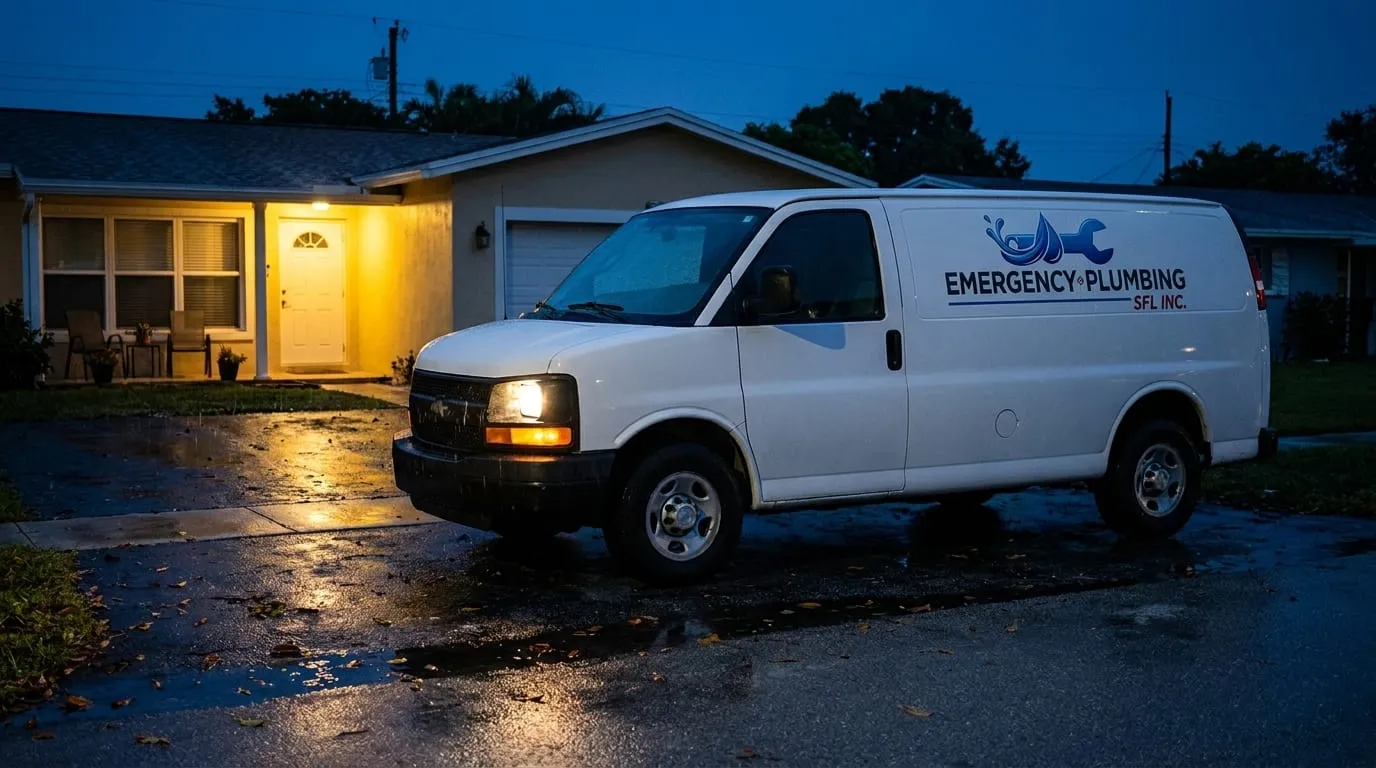
Dispatch takes the address and the building, works out whether the failure is inside the unit or in shared pipe, and sends a truck over the Rickenbacker with the parts likely to be needed.
What is different about plumbing on an island?
Three things, and all of them come from the geography. Key Biscayne is 1.71 square miles at three feet of elevation, reached by the Rickenbacker Causeway, which opened in 1947 and is still the only way on and off. Every truck, every crew and every replacement part crosses one bridge, so the honest thing a plumber can do is arrive with the parts a job like yours usually needs rather than discover a second trip is required.
Second, salt is on every side. The island is bracketed by Crandon Park to the north and Bill Baggs Cape Florida State Park to the south, and there is water in every direction, so copper supply lines corrode from the outside as well as the inside everywhere here rather than only on the seaward streets.
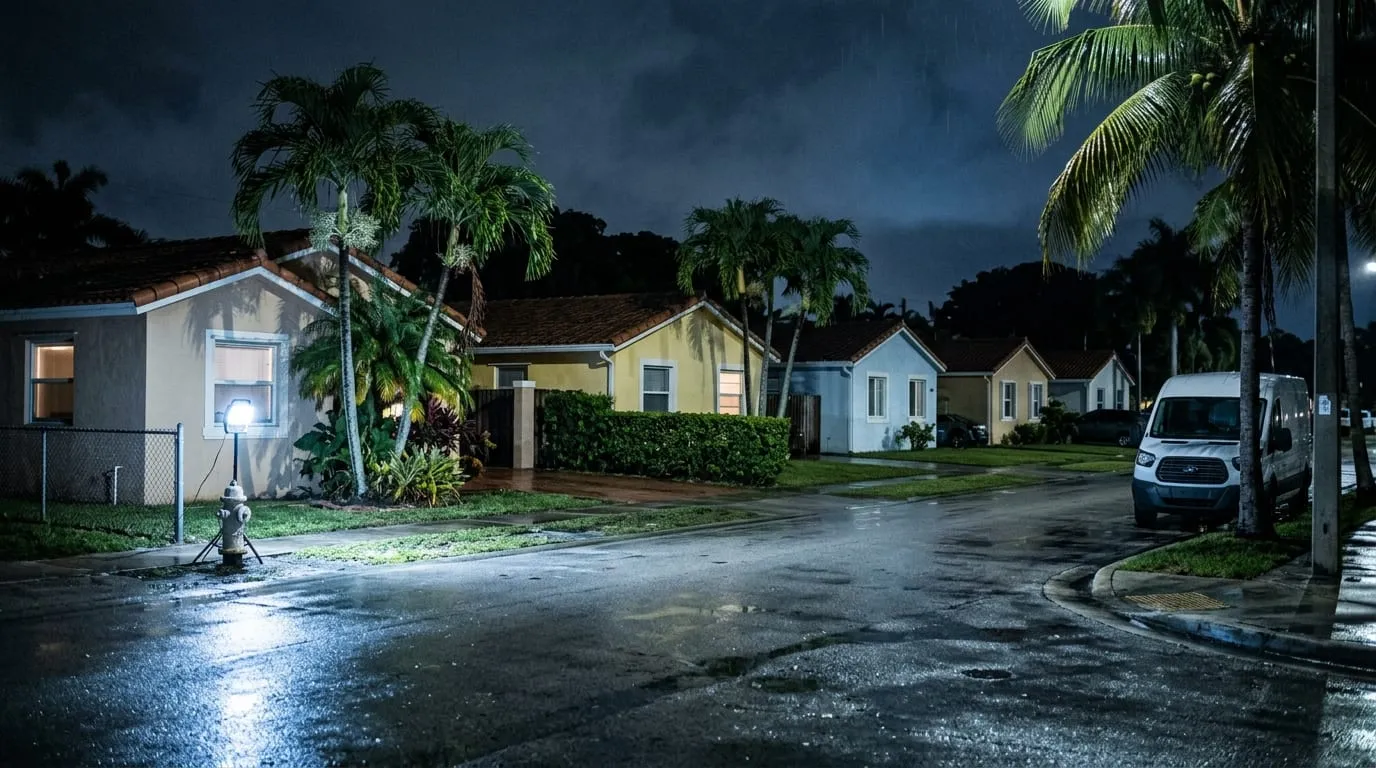
Third, the village sits in Evacuation Zone A. Storm season is not an abstraction on a barrier island at three feet, and it shapes what is worth doing before a season rather than during one.
What is under these buildings
The island only became residential once there was a bridge to it.
The island was a coconut plantation and only developed residentially after the Rickenbacker Causeway opened in 1947, with new homes offered from 1951.
Key Biscayne incorporated in June 1991, the first new city in Miami-Dade County in more than fifty years, and completed its civic facilities in 2004.
Small and low. The village runs its own fire, police and school systems but not the water, which is the county utility.
The island’s low elevation and ocean exposure put it in the first zone to be evacuated, which is worth planning maintenance around.
The first residential wave is single-family from the 1950s, in the cast iron era, while the oceanfront is condominium towers where the pipe that fails is usually shared.
How it fails here
Salt, shared pipe, and a single road on and off.
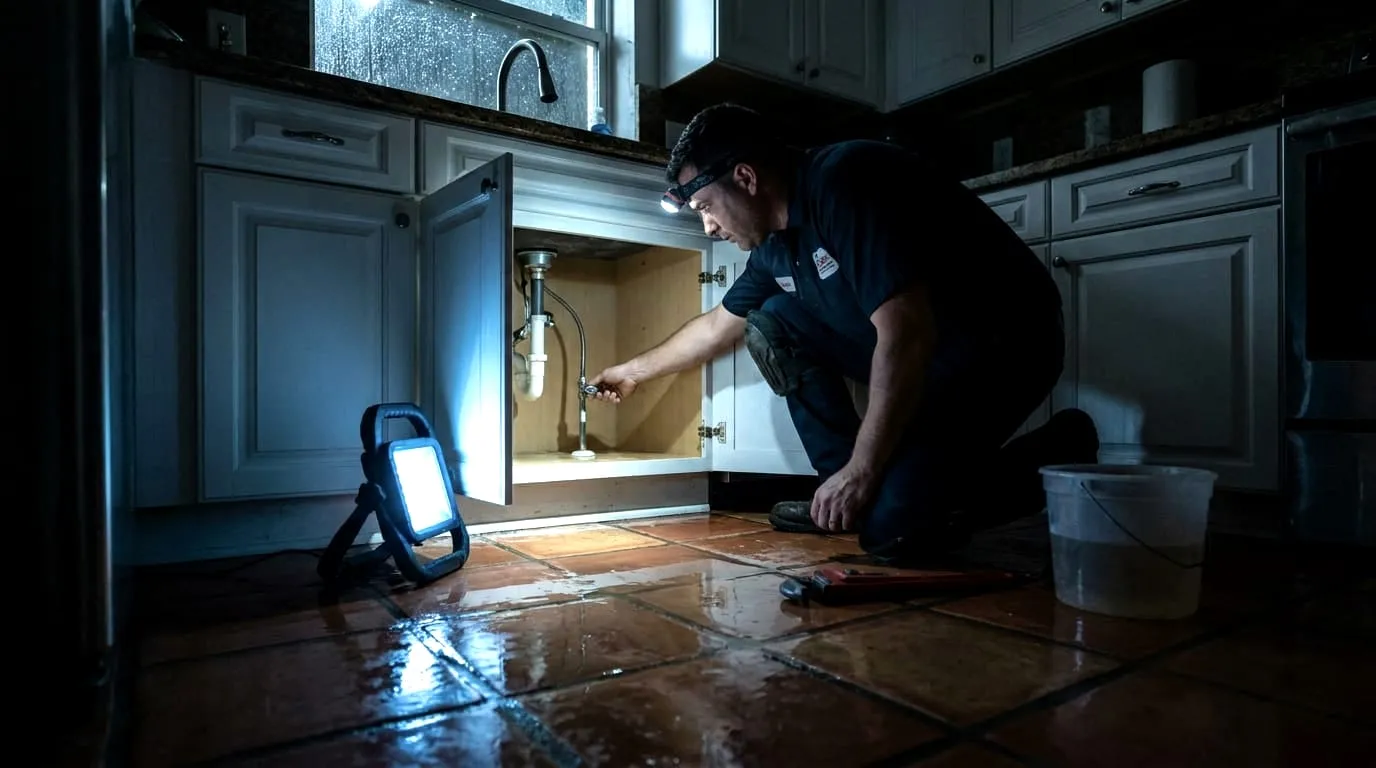
With water on every side, salt works on copper from the outside while water chemistry works on the inside. A pinhole here is usually a report on the whole run rather than one isolated fault, and age in years predicts it poorly.
Ask what the rest of the run looks like.
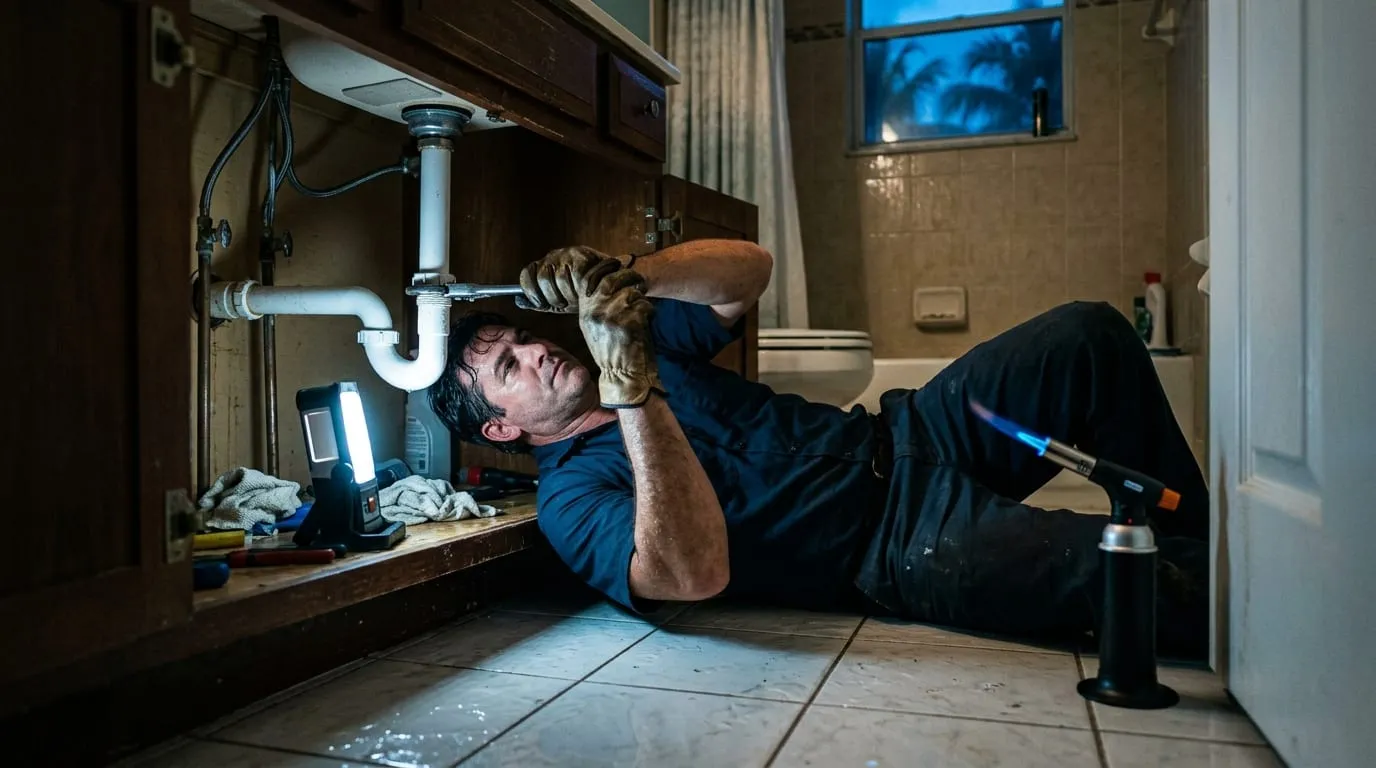
RepipingOn the oceanfront the pipe that failed is commonly a shared stack or riser rather than your unit, so the apartment reporting the water is often not the apartment with the fault. Establishing that first protects you from paying for somebody else’s pipe.
Note the time and tell the building.
Leak detectionIn Evacuation Zone A at three feet, a shut-off you cannot find, a corroded valve or a slow drain is a much bigger problem in September than in March. This is the place where doing the boring job early genuinely pays.
Find and test your shut-off now.
Emergency plumbingWhere we work
Under two square miles, bracketed by two parks.
The first residential wave after the causeway, which puts those houses in the cast iron era and gives their supply lines seventy years of salt air from every direction.
Vertical buildings where a leak is usually a shared stack or riser rather than one unit, and where getting to it runs through building management and a booked shut-off window.
Crandon Park north and Bill Baggs Cape Florida south bracket the village, so the built strip is narrow and no property here is far from salt water.
Who owns what
The village runs a lot of things. Water is not one of them.
Reviews
Real reviews from the company’s own Google Business Profile, quoted with the reviewer’s public name.
77of the 77 reviews captured from the profile are five stars, and none is below five.
Read straight from the Google Business Profile on August 20, 2026. Counted, not estimated.
Open the Google profileMike came and save me the day he replaced my waterheater after It was flooded all over thanks God there is emergency plumbing SFL BIG RECOMANDATION

Moti gave exceptional service ! He arrived quickly and was done less than an hour ! Will use this company again

Had a really slow drain in my bathroom and it was driving me crazy. The guy who came out was super chill and found a bunch of hair and gunk clogging it up. He cleared it out in like 20 minutes, and now it’s draining faster than before! …
Questions
Yes. The Rickenbacker Causeway is the only way on and off, so the practical difference is preparation rather than willingness: we take enough detail on the call to arrive with the parts a job like yours usually needs, instead of crossing the bridge twice.
Because the corrosion works from both directions. With water on every side of a 1.71 square mile island, salt attacks the outside of the pipe while water chemistry works on the inside, so the age of the house predicts failure less well than it does inland.
Usually not, and that matters before anyone opens anything. Water in a tower travels down, so the source is commonly the unit above or a shared riser, and in a building that is the association’s line rather than yours.
Find your shut-off and confirm it actually turns. On a barrier island at three feet in Evacuation Zone A, a valve that has seized is a much larger problem in September than the small job it is in March.
Nearby
Both of them are across water from here.
Live dispatch · 24 / 7 / 365
A person answers at any hour, takes enough detail for the crossing to be worth making once, and routes a plumber to the address.
No obligation. Work performed under Florida plumbing contractor license CFC1433655.