One-acre lots by design
The mid-century development put ranch houses on parcels of about an acre, which is the reason the landscaping is mature and the reason the service run is long.
Miami-Dade County · line answered right now
Dispatch takes the address, stays on the line while you find the shut-off, and routes a plumber who expects the buried run here to be far longer than a suburban one.
Why do Pinecrest leaks hide for so long?
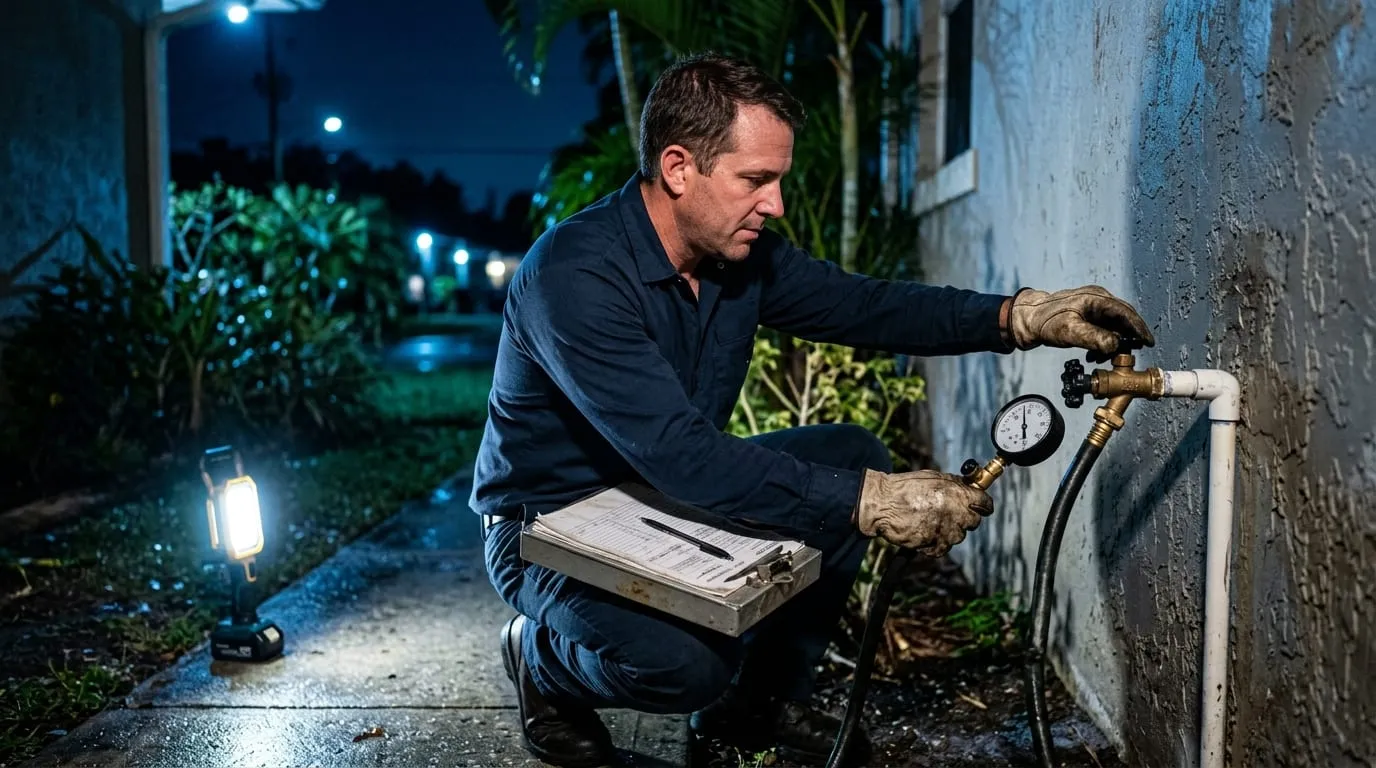
Because of the lot size. Pinecrest grew in the 1950s and 1960s around ranch-style houses on one-acre parcels, and that is what gives the village its lush, low-density character. It also means the buried run between the meter and the house is far longer here than in a normal subdivision, and a failure in the middle of it never appears indoors.
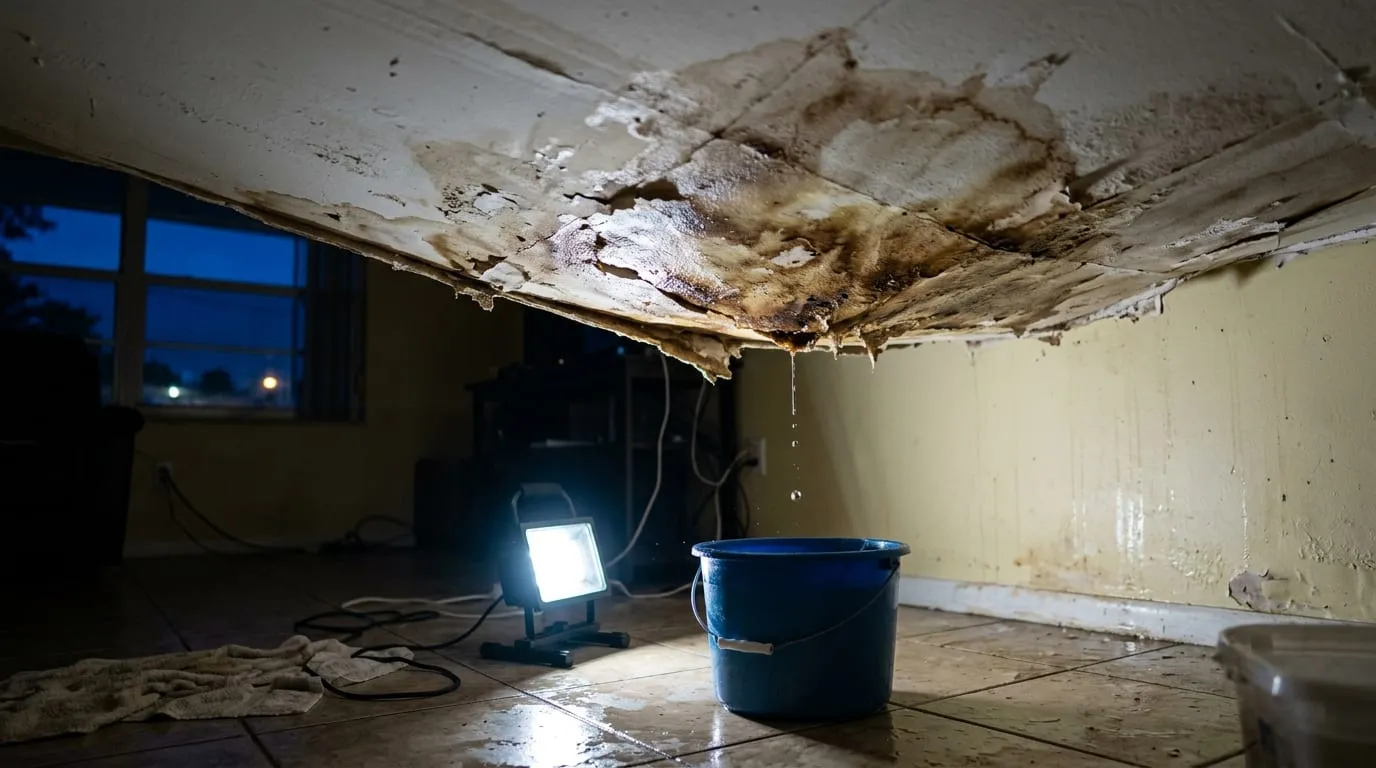
A leak in that run does not flood anything. It runs continuously into the ground, does not stop overnight, and the first thing to report it is usually a water bill that stepped up with no change in how the house is being used. The meter with every fixture closed is the test that settles it.
The other Pinecrest complication is history. Hurricane Andrew devastated this area in 1992 and much of it was rebuilt before the village even incorporated in 1996, so the age of a house and the age of its plumbing are often two different numbers.
What is under these houses
The government is younger than the pipe by forty years.
The mid-century development put ranch houses on parcels of about an acre, which is the reason the landscaping is mature and the reason the service run is long.
The 1992 hurricane devastated the area. Reconstruction came first and the village was only incorporated in March 1996.
Pinecrest issues the building permit, and property owners are sent to Miami-Dade Water and Sewer to open a water account and set a meter.
The village permit application requires Florida Department of Health approval where a septic tank is involved, which is not a form that exists for a village entirely on sewer.
Applications involving water or sewer need sign-off from the county environmental resources department and from the county water and sewer department.
How it fails here
What follows from acre lots, mature planting and a 1992 rebuild.
On an acre the run from the meter to the house is long and entirely buried. A break in it never shows indoors and never stops, so the bill is the only thing that reports it and the meter is the only thing that proves it.
Check the meter with everything closed.
Leak detectionDecades of mature planting over a long buried lateral is the ideal condition for root intrusion. A hairline crack leaks into the soil and acts as a beacon, and nothing here has a dormant season.
Ask for a camera, not another cable.
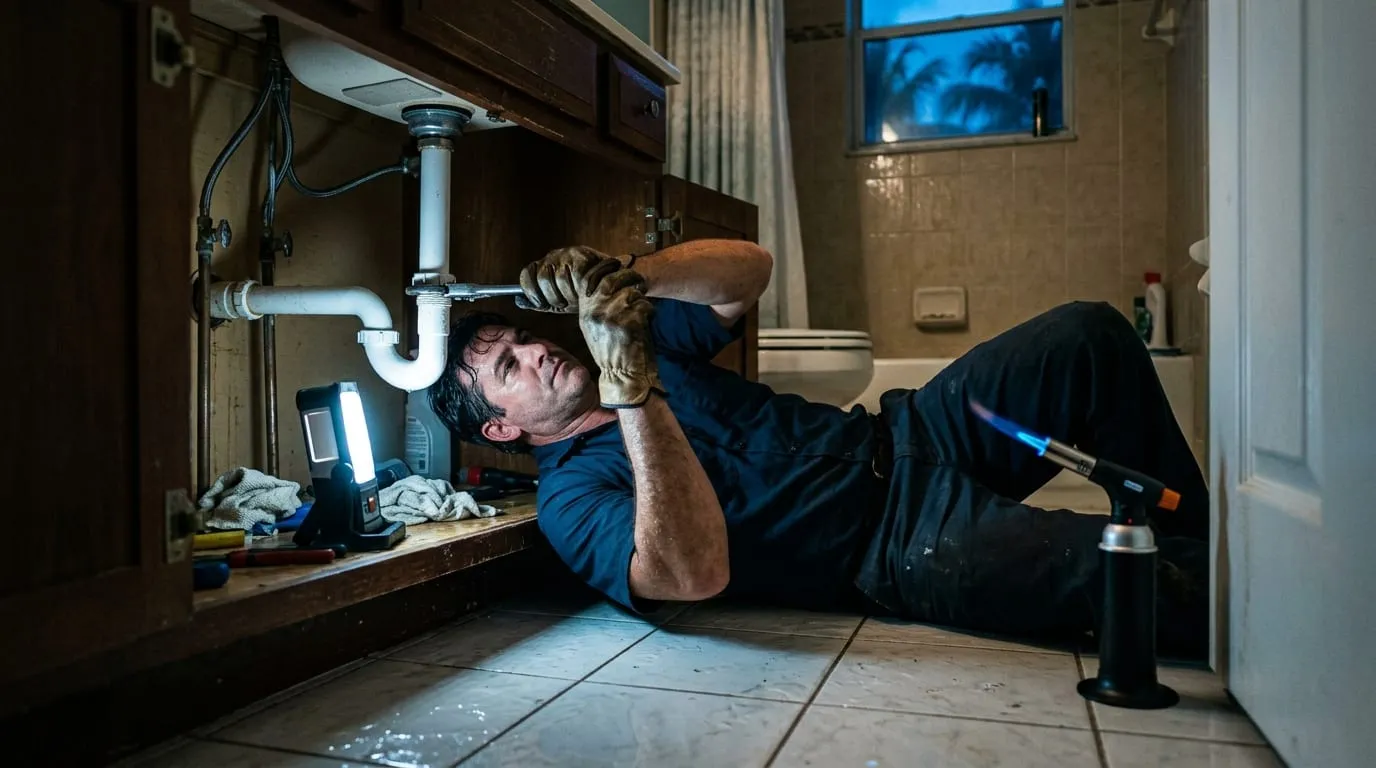
Sewer line repairA house rebuilt after 1992 can hold two or three generations of pipe joined by whoever did the work that year. What is behind the wall is a real question rather than a formality.
Ask what the rest of the run is made of.
RepipingWhere we work
Seven and a half square miles, and the lot size is what decides the job.
The 1950s and 1960s core, where the lot is large enough that the buried service run between the meter and the house is the weak point rather than anything inside it.
Houses reconstructed after 1992, where the age of the roof and the age of the pipe are frequently different numbers and only one of them is visible.
Where the village meets older incorporated cities. The utility answer stays the county on both sides, but the permit authority changes at the line.
Who owns what
The village permits it and the county owns it.
Reviews
Real reviews from the company’s own Google Business Profile, quoted with the reviewer’s public name.
77of the 77 reviews captured from the profile are five stars, and none is below five.
Read straight from the Google Business Profile on August 20, 2026. Counted, not estimated.
Open the Google profileMike came and save me the day he replaced my waterheater after It was flooded all over thanks God there is emergency plumbing SFL BIG RECOMANDATION

Moti gave exceptional service ! He arrived quickly and was done less than an hour ! Will use this company again

Had a really slow drain in my bathroom and it was driving me crazy. The guy who came out was super chill and found a bunch of hair and gunk clogging it up. He cleared it out in like 20 minutes, and now it’s draining faster than before! …
Questions
Almost always into the ground along the run between the meter and the house. On an acre lot that run is long and completely buried, so it can leak for months without a visible sign. Reading the meter with every fixture closed is the first test.
Both, for different things. The village issues the building permit. Miami-Dade Water and Sewer is the utility, and where work touches water or sewer the county environmental department signs off as well.
The village permit application requires Florida Department of Health approval for applications involving a septic tank, which is not a form a village entirely on sewer would need. It is worth confirming for your own parcel rather than assuming either way.
Not necessarily, and it is worth finding out. A post-1992 rebuild sometimes replaced the supply and drain work and sometimes put new finishes over original pipe. The age of the house and the age of the plumbing are separate questions here.
Nearby
South Miami-Dade neighbors, all on the county utility.
Live dispatch · 24 / 7 / 365
A person answers at any hour, walks you through shutting the water off, and a plumber is routed to the address.
No obligation. Work performed under Florida plumbing contractor license CFC1433655.