
Answered 24/7 · camera first, then a decision
Hydro jetting, for the drain that closes again a few months after clearing
High pressure water at roughly three to four thousand PSI scours the pipe wall rather than punching through the blockage, which is the difference that matters when the problem is grease rather than an object.
Why does cabling a drain only work for a few months?
Because of what a cable physically does. It bores an opening of roughly two to three inches through the blockage and restores flow. It does not touch the coating on the pipe wall, so if the problem is fats, oils and grease, everything that caused the clog is still in the line when the plumber leaves. The drain works, then closes again on the same schedule it did before.
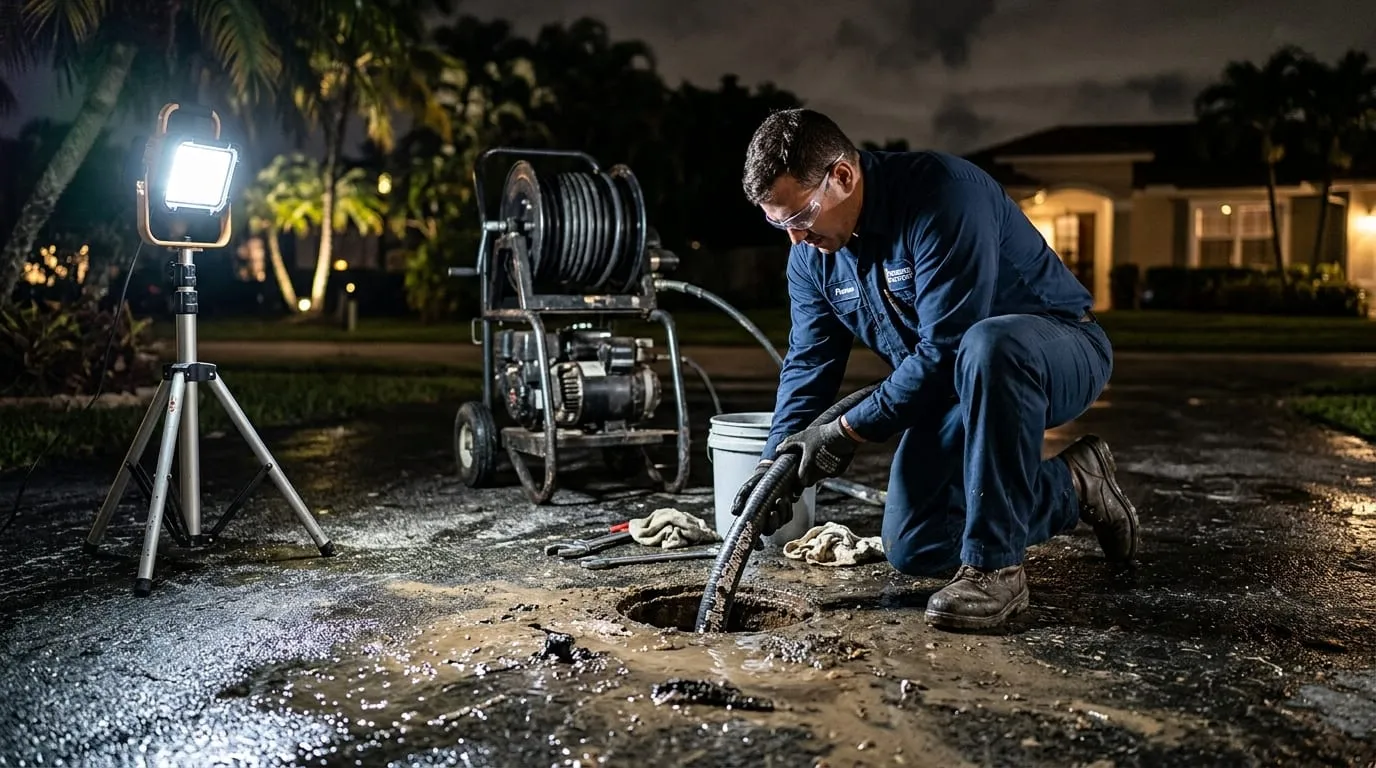
A jetter works the other way round. High pressure water at around three to four thousand PSI scours the wall itself and restores the full diameter of the pipe rather than a channel through the middle of it. On a grease line that is not a better version of cabling, it is a different job.
The reported difference in durability is large: a cabled line often closes again within months, while a jetted line on sound pipe commonly holds two to four years.
When jetting is the answer
The signs that say the wall is the problem
The useful question is not how to clear it again. It is why it keeps closing.
The same drain, every few months
A recurring interval is the clearest signal that the last clearing treated the blockage and left the cause. Something is coating the wall and narrowing the line between visits.
A kitchen line in a restaurant or a shared building
Grease is the classic case. Where a commercial kitchen or several households share a run, the load is continuous and cabling never gets ahead of it.
Roots that keep coming back
Jetting cuts and flushes root mass rather than boring through it, though roots are also a sign the pipe has a defect that needs seeing.
Slow everywhere rather than blocked at one point
A line that drains sluggishly along its whole length has lost diameter, which is a wall problem and not an obstruction problem.
How the job goes
Camera first, and sometimes camera instead
Three steps, and the first one can end the job honestly.
- 01
See the pipe before pressurizing it
Jetting needs sound pipe. On cast iron that has already scaled and thinned, high pressure is the wrong tool, and the only way to know which you have is to look. That is why the camera comes first.
- 02
Jet the run
Water at roughly three to four thousand PSI, worked along the line rather than fired at the blockage, scouring the wall back to the pipe and flushing what comes off it out of the system.
- 03
Camera again, and tell you what is under the grease
The second pass is the useful one, because a clean wall is the first time anyone can see the actual condition of the pipe. If there is a crack or a belly under there, you find out now rather than in a year.
Questions
Straight answers before you call
Can jetting damage my pipes?
It can, on pipe that has already failed. That is exactly why the camera goes in first: on scaled and thinned cast iron the honest answer is not jetting at all, it is a decision about the pipe. Anyone willing to jet without looking is guessing with your line.
How long does it last?
On sound pipe, commonly two to four years, against months for a cabled line. If a jetted line closes again quickly, that is information: something structural is holding material, and the camera pass will usually have shown it.
Is this the same as snaking?
No, and the difference is mechanical rather than a matter of degree. A cable makes an opening through the blockage. A jetter removes the coating from the wall. For grease, only one of those addresses the cause.
Do I need it every year?
A house, normally not. A commercial kitchen with a continuous grease load often benefits from an interval rather than waiting for the next failure, and we tell you what the camera suggests rather than selling a schedule.
Related work
What sits either side of jetting
It is usually one step in a sequence rather than the whole answer.
Live dispatch · 24 / 7 / 365
Clearing the same drain again?
A person answers at any hour. The camera goes in before the pressure does, and sometimes it changes the recommendation entirely.
No obligation. Work performed under Florida plumbing contractor license CFC1433655.