Oak Lawn, then Riviera, then Riviera Beach
The place was Oak Lawn in the 1880s, renamed Riviera in 1893, incorporated as a town in 1922 and became a city in 1959. Its oldest ground predates most of Palm Beach County.
Palm Beach County · line answered right now
Dispatch takes the address and establishes whether it is on the mainland, on Singer Island or in the port district, because those are three quite different sets of plumbing.
Where does Riviera Beach water actually come from?
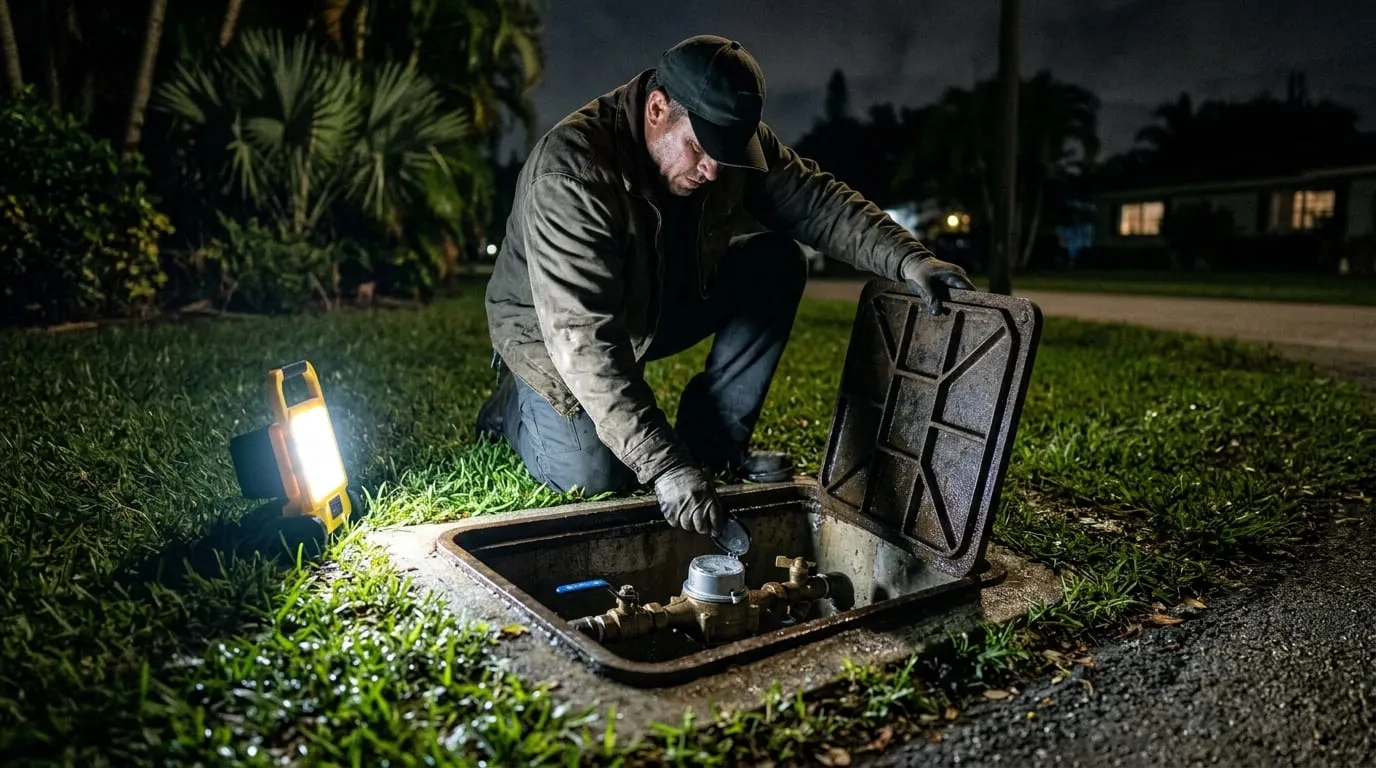
From under the city. The Riviera Beach Utility Special District was established in 1950 and supplies roughly 34,700 people from a groundwater source: 27 wells spread across the city, pumping the East Coast Surficial aquifer. The city is building a new water treatment plant, and the district publishes its own service area map rather than leaving the boundary to guesswork.
That local supply matters less to a homeowner than the fact that it is a special district at all. It means the utility, its service boundary and its rules are the city’s own rather than the county’s, which is a different answer from Greenacres or Royal Palm Beach a few miles inland.
The other thing that shapes work here is geography. The city takes in most of Singer Island, a barrier peninsula with the Atlantic on one side and the Lake Worth Lagoon on the other, so a substantial part of its housing sits in salt air from every direction.
What is under these buildings
Riviera Beach has older ground than almost any city around it.
The place was Oak Lawn in the 1880s, renamed Riviera in 1893, incorporated as a town in 1922 and became a city in 1959. Its oldest ground predates most of Palm Beach County.
The utility special district was established in 1950 and draws from the East Coast Surficial aquifer through 27 wells across the city, supplying around 34,700 people.
A barrier peninsula separated from the mainland by the Lake Worth Lagoon, which puts a large share of the housing between an ocean and a lagoon.
The Port of Palm Beach, a Coast Guard station and a municipal marina all sit in the city, so commercial and marine plumbing is a real part of the work here rather than an exception.
There is a water and sewer service area map, which is more than most cities offer and worth consulting before assuming who serves a parcel.
How it fails here
One belongs to the island, one to the old mainland, one to the port.
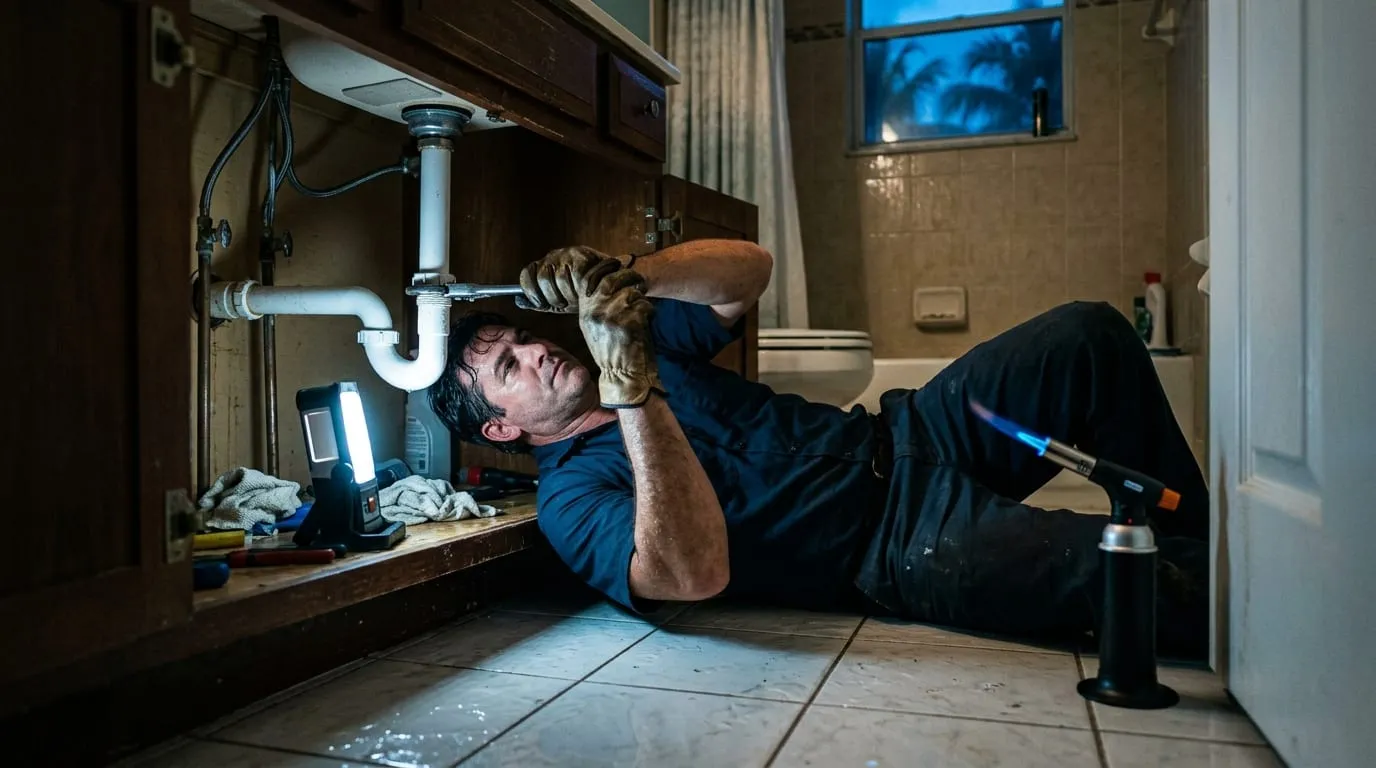
With the Atlantic on one side and the lagoon on the other, salt works on copper from the outside while water works on it from the inside. One pinhole is usually a report on the whole run rather than an isolated fault.
Ask what the rest of the run looks like.
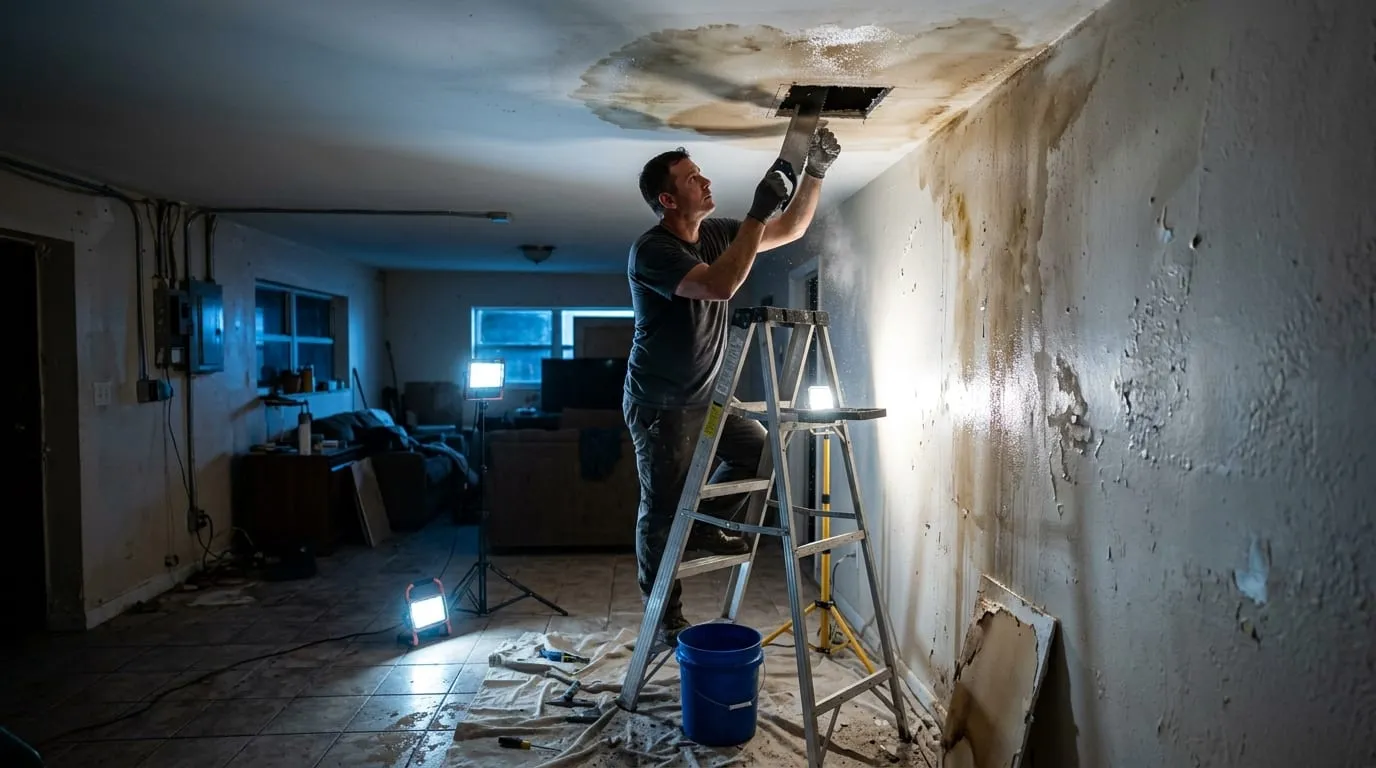
RepipingGround settled from the 1880s and a town since 1922 means some housing predates copper as the default. Galvanized steel supply closes from the inside, so every tap drops together.
Compare pressure at the meter and at a tap.
Cast iron replacementWorking port and industrial premises put continuous volume and grease through lines that are rarely maintained for it. That wants jetting on a schedule rather than cabling after a failure.
Ask when the line was last jetted.
Hydro jettingWhere we work
The section decides the job more than the street name does.
A barrier peninsula with the Atlantic on one side and the Lake Worth Lagoon on the other, so salt reaches copper from every direction and condominium towers mean shared stacks rather than slab runs.
The oldest ground in the city, settled from the 1880s and a town since 1922, which is early enough for galvanized supply as well as cast iron drains behind the same wall.
Working port and industrial premises, where the plumbing load is commercial and continuous rather than domestic, and where grease and volume decide the maintenance interval.
Who owns what
A city utility special district, with its own published boundary.
Reviews
Real reviews from the company’s own Google Business Profile, quoted with the reviewer’s public name.
77of the 77 reviews captured from the profile are five stars, and none is below five.
Read straight from the Google Business Profile on August 20, 2026. Counted, not estimated.
Open the Google profileMike came and save me the day he replaced my waterheater after It was flooded all over thanks God there is emergency plumbing SFL BIG RECOMANDATION

Moti gave exceptional service ! He arrived quickly and was done less than an hour ! Will use this company again

Had a really slow drain in my bathroom and it was driving me crazy. The guy who came out was super chill and found a bunch of hair and gunk clogging it up. He cleared it out in like 20 minutes, and now it’s draining faster than before! …
Questions
The Riviera Beach Utility Special District, which is the city’s own rather than the county’s. It has been running since 1950 and draws from 27 wells across the city into the East Coast Surficial aquifer, and it publishes a service area map.
Yes. Most of the island is inside the city, and it is where copper supply lines fail earliest because salt reaches them from the Atlantic on one side and the lagoon on the other.
Usually a shared stack or riser rather than your unit, which makes it the association’s line. Water travels down, so the apartment reporting it is frequently not the one with the fault, and establishing that comes before anything is opened.
Yes, and in this city that is a real part of the work. The Port of Palm Beach, a Coast Guard station and a municipal marina are all here, and a line carrying continuous commercial volume needs jetting on an interval rather than cabling after each failure.
Nearby
Northern Palm Beach County neighbors on three different utilities.
Live dispatch · 24 / 7 / 365
A person answers at any hour, walks you through shutting the water off, and a plumber is routed to the address.
No obligation. Work performed under Florida plumbing contractor license CFC1433655.