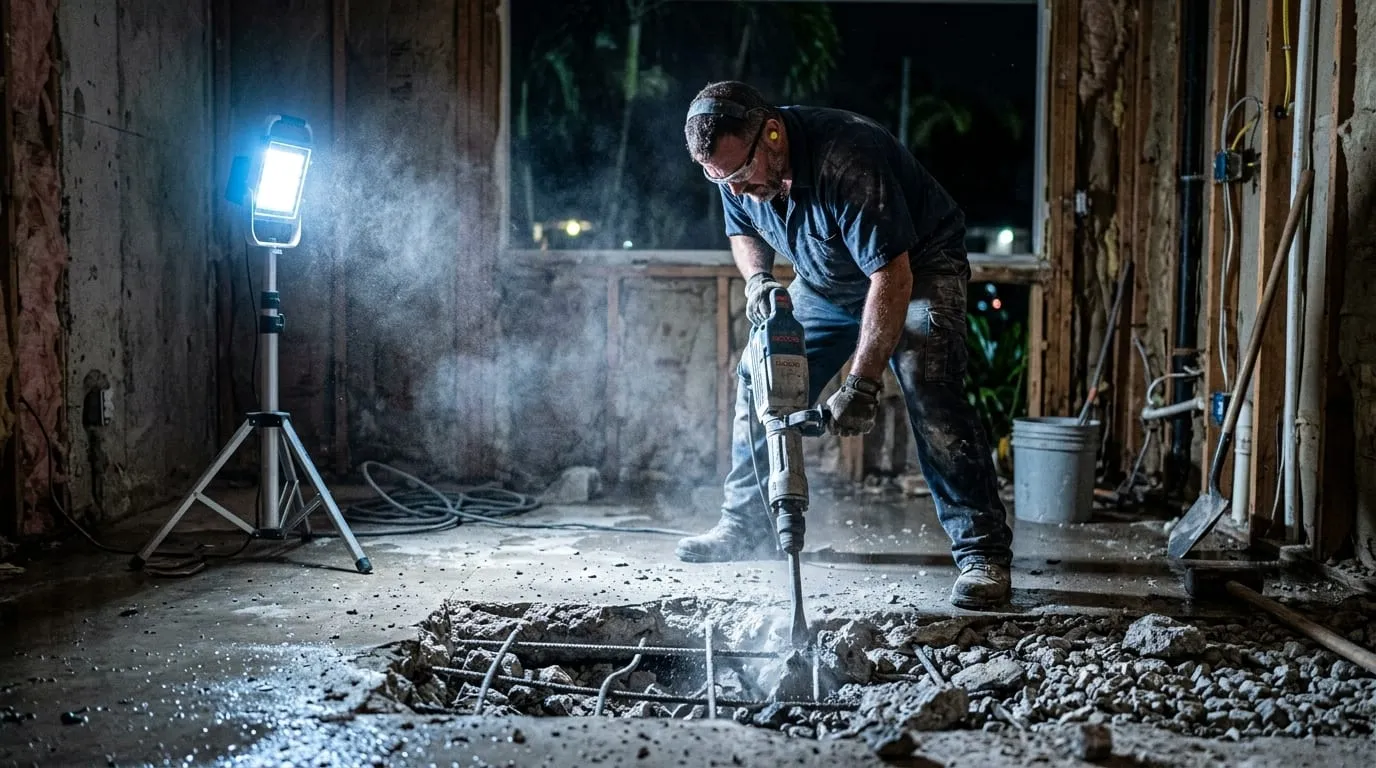
Andrew came ashore near here
The 1992 hurricane made landfall close to Cutler Ridge and left almost total destruction, with nearly every building suffering major wind damage.
Miami-Dade County · line answered right now
Dispatch takes the address, stays on the line while you find the shut-off, and routes a plumber who expects the age of the house and the age of the pipe to be different numbers here.
Why is the age of a Cutler Bay house so hard to read?
Because of 1992. Hurricane Andrew made landfall near what was then Cutler Ridge and left the area in almost total destruction, with nearly every building sustaining major wind damage. The town that exists now incorporated in 2005, after the recovery, and took the name Cutler Bay.
What that means practically is that a great deal of the housing here is post-storm work sitting on pre-storm ground. Wind takes roofs, walls and everything above the slab; it does not take the slab, the service run to the meter or the lateral to the main. So a house that looks like a 1990s rebuild can still have the original buried pipe underneath it.
That is the question worth answering before any work starts, and a camera answers it in one visit rather than an argument. It is also why nothing about the visible age of a building here should be assumed to apply to what is under the floor.
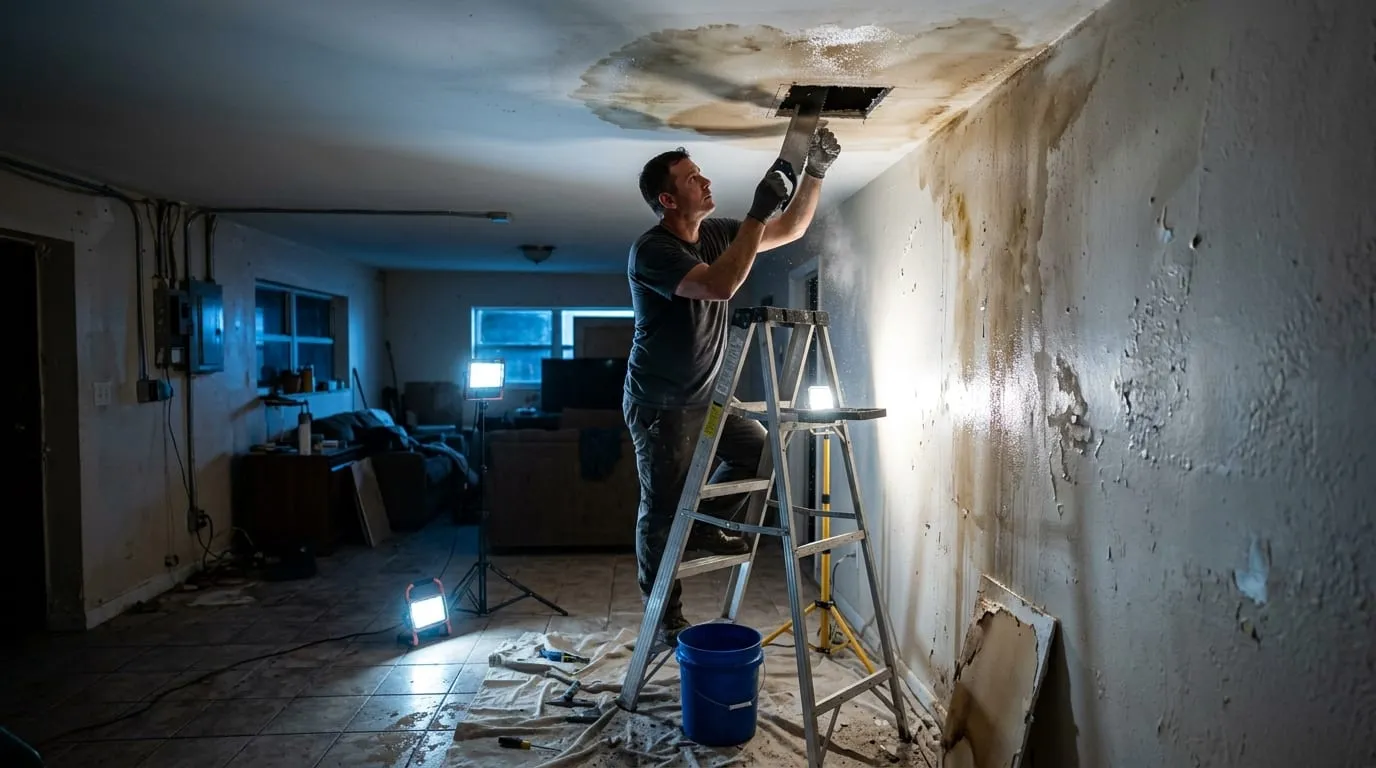
What is under these houses
The storm rewrote this town from the ground up, but not from below it.
The 1992 hurricane made landfall close to Cutler Ridge and left almost total destruction, with nearly every building suffering major wind damage.
Cutler Bay incorporated in November 2005, taking its name in place of Cutler Ridge, so the municipality is younger than the rebuild that made it possible.
A rebuild replaces what stood above the slab. The service run to the meter and the lateral to the main frequently stayed exactly where they were.
Close enough that salt in the air and a shallow water table are constants rather than a coastal exception.
More than 105,000 Miami-Dade properties remain on septic and 58,349 of them are periodically compromised, meaning they stop working properly during storms or in wet years.
How it fails here
What a rebuilt town on bay-side ground produces.
The rebuild replaced what stood above the slab. The lateral to the main often did not change, so a 1990s house can be draining through a run that predates the storm entirely.
Ask for a camera, not another cable.
Sewer line repairRepairs done quickly in the years after a storm were done by many different hands with whatever was available. What is behind a wall here is a genuine question rather than a formality.
Ask what the rest of the run is made of.
RepipingAcross the county more than half the properties still on septic stop working properly in storms and wet years. A system that behaves all summer and backs up every autumn is reporting the water table, not the household.
Note whether it tracks the weather.
Septic servicesWhere we work
One storm decided most of what separates them.
The settled part that took the direct hit in 1992, so most of what stands there is post-Andrew work over pre-Andrew slabs and buried service runs.
The eastern section toward Biscayne Bay, where the water is close enough that salt on copper and a shallow table are permanent conditions rather than occasional ones.
Houses put back up in the years after the storm, where the visible age of the building and the age of the pipe under it are usually two different numbers.
Who owns what
A 2005 town on a county utility.
Reviews
Real reviews from the company’s own Google Business Profile, quoted with the reviewer’s public name.
77of the 77 reviews captured from the profile are five stars, and none is below five.
Read straight from the Google Business Profile on August 20, 2026. Counted, not estimated.
Open the Google profileMike came and save me the day he replaced my waterheater after It was flooded all over thanks God there is emergency plumbing SFL BIG RECOMANDATION

Moti gave exceptional service ! He arrived quickly and was done less than an hour ! Will use this company again

Had a really slow drain in my bathroom and it was driving me crazy. The guy who came out was super chill and found a bunch of hair and gunk clogging it up. He cleared it out in like 20 minutes, and now it’s draining faster than before! …
Questions
Some of it, usually. A rebuild replaces what stood above the slab, and wind does not take the buried service run or the lateral to the main. So the parts you can see are often newer than the parts you cannot, and a camera settles which is which.
Because the drain leaving the property may not be modern. If the lateral survived 1992 it is decades older than the house above it, and it has spent that time under root systems that never go dormant here.
Miami-Dade Water and Sewer. The town, which only incorporated in 2005, is the permit authority, but the water and sewer mains belong to the county utility.
It is common and it is not something to live with. Countywide, more than half the properties still on septic are periodically compromised, meaning they stop working properly during storms and wet years, because the system is reporting the water table rather than the household.
Nearby
South Miami-Dade neighbors, all on the county utility.
Live dispatch · 24 / 7 / 365
A person answers at any hour, walks you through shutting the water off, and a plumber is routed to the address.
No obligation. Work performed under Florida plumbing contractor license CFC1433655.