1950s and 1960s first, then the 2000s
Initial growth came as single-family homes and motels; the early 2000s boom replaced the beachfront motels with high-rise condominium.
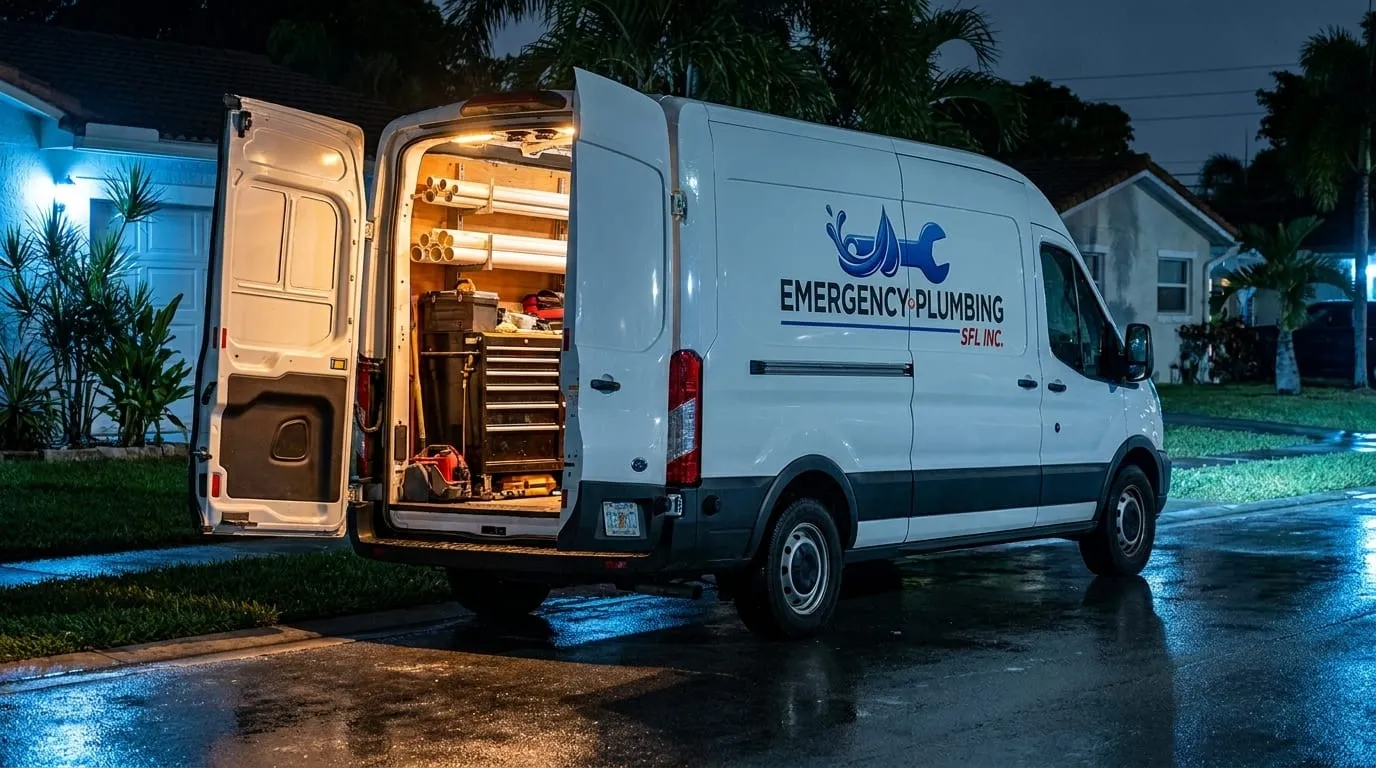
Miami-Dade County · line answered right now
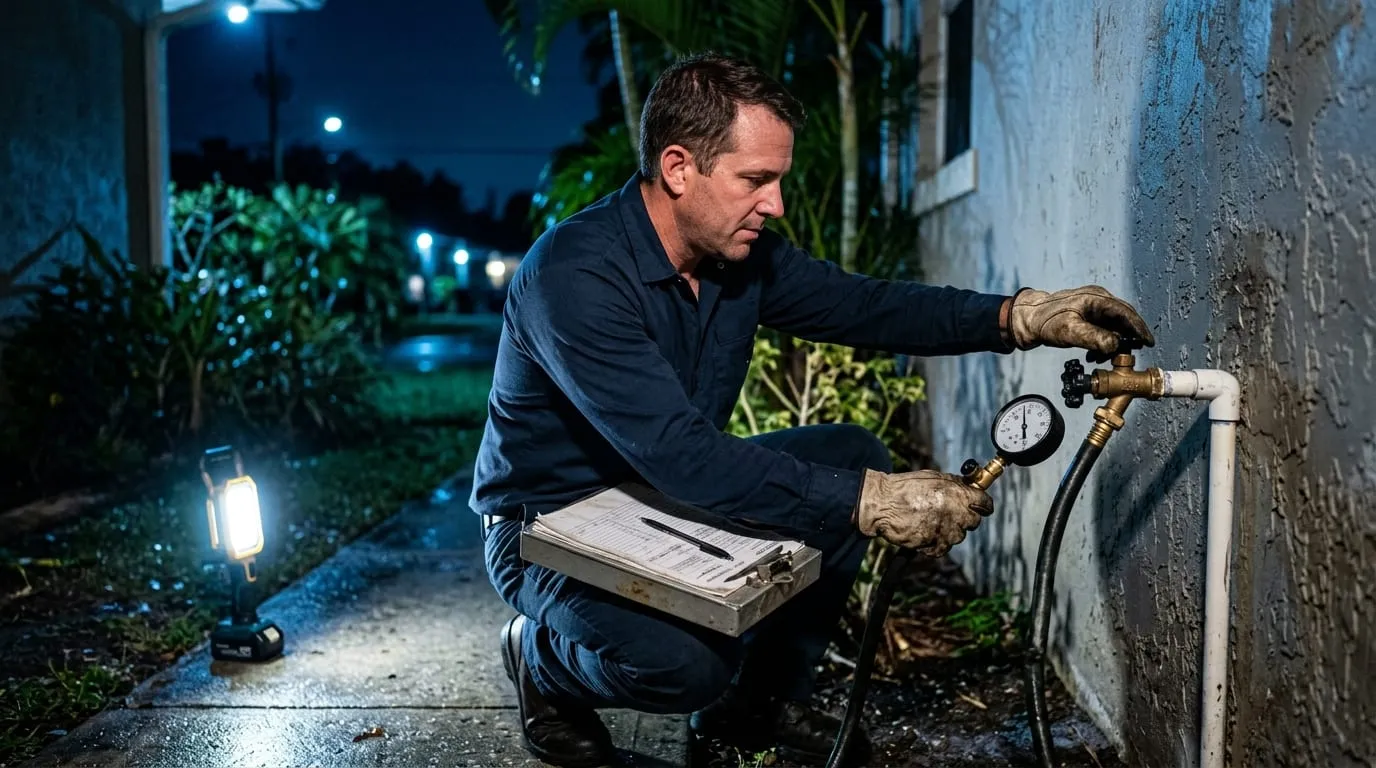
Dispatch takes the address, the building and the unit, then works out whether the failure is inside the apartment or in a shared stack, because in this city it is usually the stack.
Why is almost every plumbing call here a building problem?
Because of what the city is made of. Sunny Isles Beach is a barrier island of just 1.01 square miles, and the real estate boom of the early 2000s replaced its beachfront motels with high-rise condominiums to the point where it now carries the fourteenth tallest skyline in the United States. In a city that is mostly vertical, the pipe that fails is mostly shared.
That changes the first question. Water appearing in an apartment usually travelled down from somewhere else, so the unit reporting it is frequently not the unit with the fault, and responsibility splits between the owner and the association before anyone opens a wall.
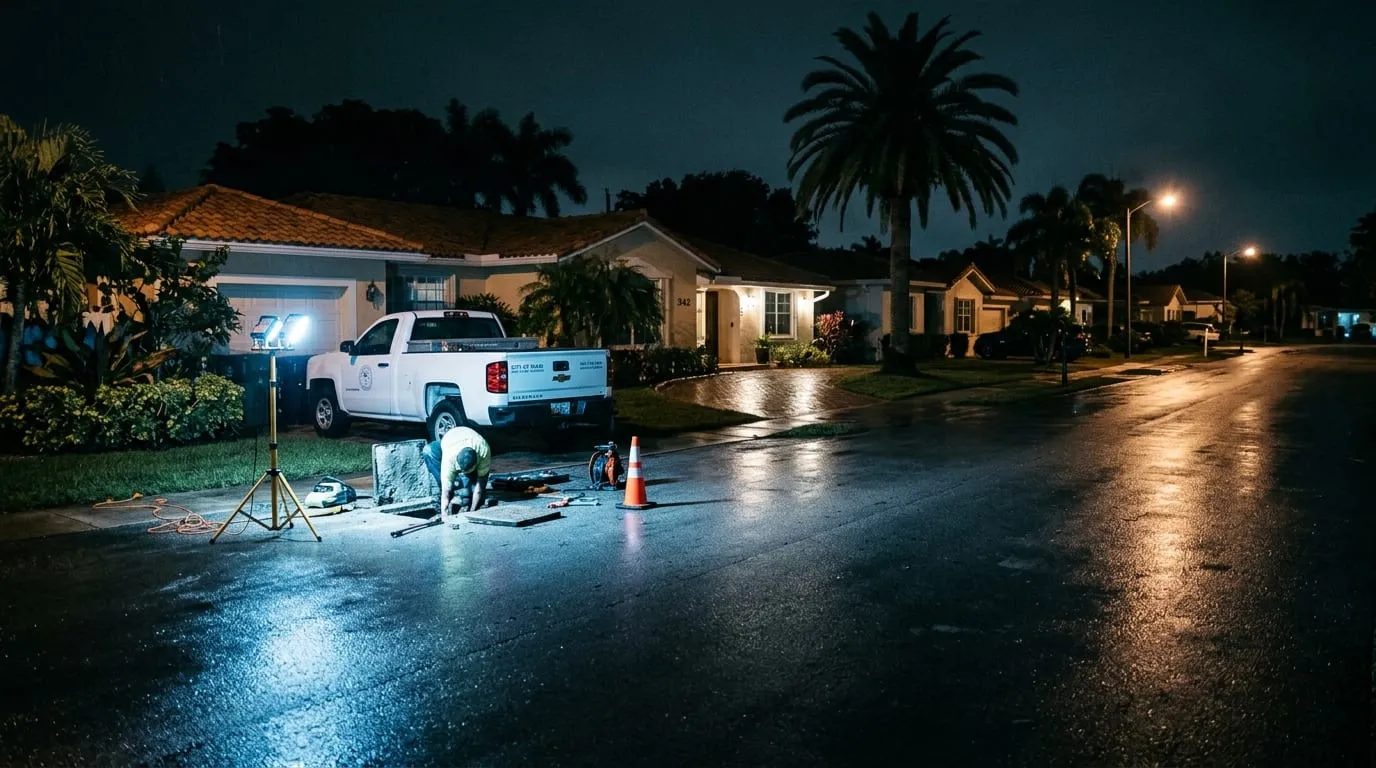
It also changes the logistics. Getting to a shared stack means building management, a booked shut-off window and access through parts of the building that are not yours, which is why the detail taken on the phone matters more here than almost anywhere.
What is above and below these floors
One square mile, three feet up, with water on both sides.
Initial growth came as single-family homes and motels; the early 2000s boom replaced the beachfront motels with high-rise condominium.
On 1.01 square miles. That is what makes this a stack-and-riser city rather than a slab-leak city.
A barrier island with the Atlantic on one side and the Intracoastal on the other, so salt reaches copper supply lines from every direction.
Which means most of its building stock predates the municipality that regulates it, and much of it postdates the municipality by a decade.
NMB Water names Sunny Isles Beach in its service area, alongside North Miami Beach, Miami Gardens, Aventura and Golden Beach.
How it fails here
Two of them are the building rather than the apartment.
The commonest call in a vertical city. Water travels down, so the source is usually the unit above or a shared riser, which makes it the association’s line rather than yours.
Note the time and tell the building.
Leak detectionOne fixture is local. Several at once, or several floors at once, is the stack, and that is a building repair rather than an apartment one.
Stop using water and tell the building.
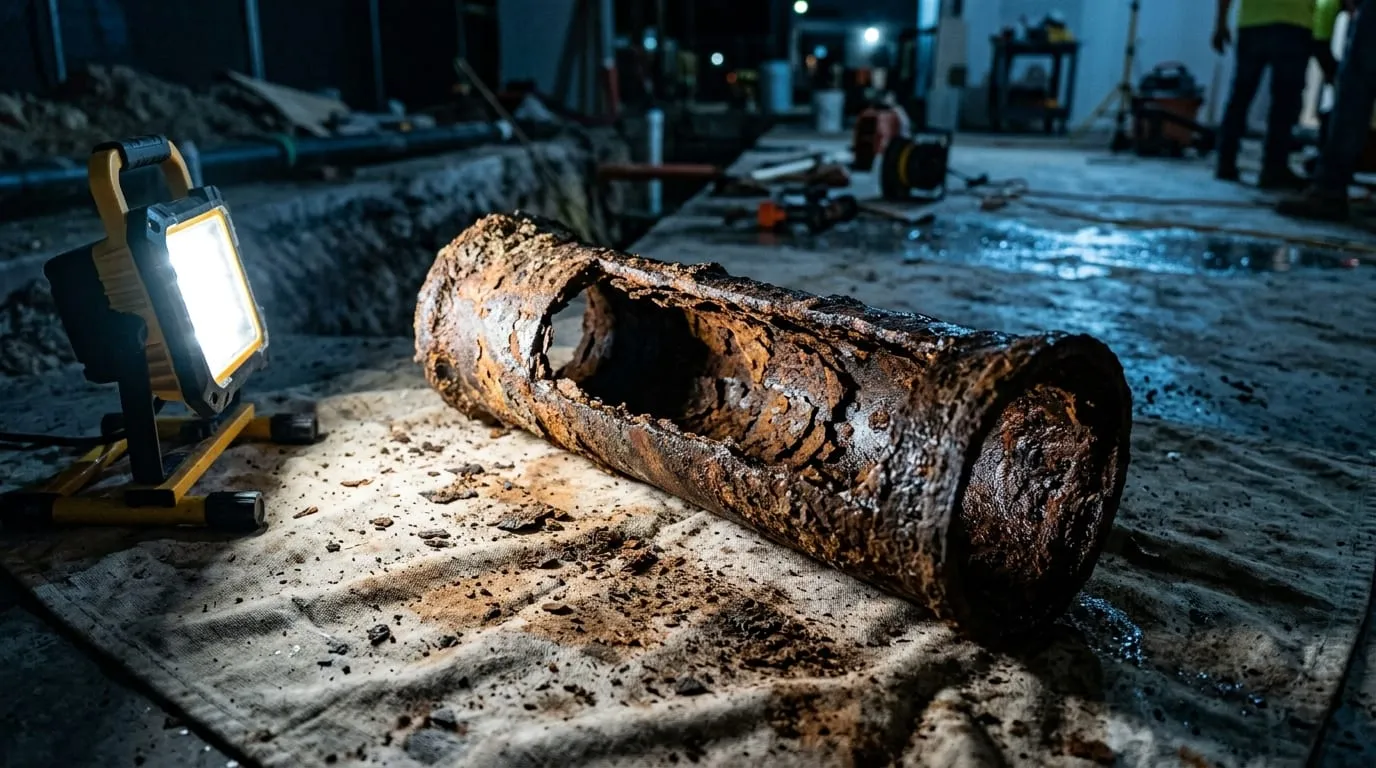
Sewer camera inspectionWith salt water on both sides of a one-mile island, copper corrodes from the outside as well as the inside, so a pinhole can turn up in a run that is not old and usually reports on the whole run.
Ask what the rest of the run looks like.
RepipingWhere we work
Ocean on one side, Intracoastal on the other, and towers between them.
Where the motels used to be, now high-rise condominium, and where a leak is almost always a shared stack or riser rather than anything inside one apartment.
Single-family houses from the first growth period, which puts them in the cast iron era with seventy years of salt air on their supply lines.
The western edge facing Aventura, where a property has water behind it as well as in front and the table is never far below the slab.
Who owns what
The water comes from another city, and the building sets the schedule.
Reviews
Real reviews from the company’s own Google Business Profile, quoted with the reviewer’s public name.
77of the 77 reviews captured from the profile are five stars, and none is below five.
Read straight from the Google Business Profile on August 20, 2026. Counted, not estimated.
Open the Google profileMike came and save me the day he replaced my waterheater after It was flooded all over thanks God there is emergency plumbing SFL BIG RECOMANDATION

Moti gave exceptional service ! He arrived quickly and was done less than an hour ! Will use this company again

Had a really slow drain in my bathroom and it was driving me crazy. The guy who came out was super chill and found a bunch of hair and gunk clogging it up. He cleared it out in like 20 minutes, and now it’s draining faster than before! …
Questions
Usually not, and it matters before anyone opens anything. Water in a tower travels down, so the source is commonly the unit above or a shared riser, and in a building that is the association’s line rather than yours.
Yes, and it is most of the work in this city. The practical difference is preparation: buildings want notice and a shut-off window, and getting to a shared stack runs through management rather than through a front door.
Because this is a one-square-mile barrier island with the Atlantic on one side and the Intracoastal on the other. Salt attacks the outside of the pipe while water chemistry works on the inside, so age in years predicts a pinhole poorly here.
NMB Water, which is owned and run by the City of North Miami Beach. Sunny Isles Beach is named in its service area along with North Miami Beach, Miami Gardens, Aventura and Golden Beach.
Nearby
Three neighbors, all on the same regional water.
Live dispatch · 24 / 7 / 365
A person answers at any hour, works out whether the pipe is yours or the building’s, and routes a plumber to the address.
No obligation. Work performed under Florida plumbing contractor license CFC1433655.