
Two counties · dozens of building departments
Who issues your plumbing permit, and how to find out in a minute
In both counties the permit comes from the municipality where the property sits, not the county, unless the property is unincorporated. In Miami-Dade the folio number settles it; in Broward a single county board governs the code across every city.
Who issues a plumbing permit in Broward or Miami-Dade?
The building department of the city the property is in. Each municipality has its own building official, its own submission process and its own fee schedule, which is why two neighboring addresses can have quite different experiences of the same job.
The exception is unincorporated land. In Miami-Dade, the county Department of Regulatory and Economic Resources handles permitting for unincorporated areas, and the county states that its process is solely for properties whose folio number starts with thirty. That single digit pair is the fastest way to answer the question for your own address.
Miami-Dade adds a second body for some work. Where a job affects water or sewer service, the county requires sign off from the water and sewer department in addition to the municipal permit, so a sewer or service line job can involve two authorities rather than one.
The structure
Two counties, two different shapes
People reasonably assume that a county is the permitting authority and that its rules apply uniformly inside it. Neither of those is quite right here, and the way each county is put together is worth understanding before you start.
Broward: one code board over thirty-one cities
Broward has a feature most counties do not. The Broward County Board of Rules and Appeals exercises jurisdiction over all thirty-one municipalities as the regional authority for code interpretation and product approval. It considers proposed amendments to the building and fire codes, hears appeals against decisions made by building and fire officials, and issues formal interpretations where the meaning of a code section is disputed. Neither the county commission nor any individual municipality may adopt something in conflict with the code as adopted.
The practical effect is that the permit still comes from your city, but the code being applied and the interpretation of it are governed countywide. That is why a code question in Broward has a defined place to go, and why an appeal is a real route rather than a theoretical one.
Miami-Dade: the folio decides, and utilities get a second look
Miami-Dade has thirty-five municipalities, each with its own building official. The county handles permitting only for the unincorporated municipal service area, and the county states the distinction plainly: its process is solely for properties with folios that start with thirty. Everything else goes to the city, and the county directs owners to the property appraiser or the municipal codes to establish which they are.
Separately, the county requires water and sewer department review where work touches water or sewer capacity or connections. So on a sewer lateral, a service line, or a job that changes what the property draws, expect the utility sign off alongside the municipal permit. That is not a delay somebody has invented; it is the county process.
What needs a permit
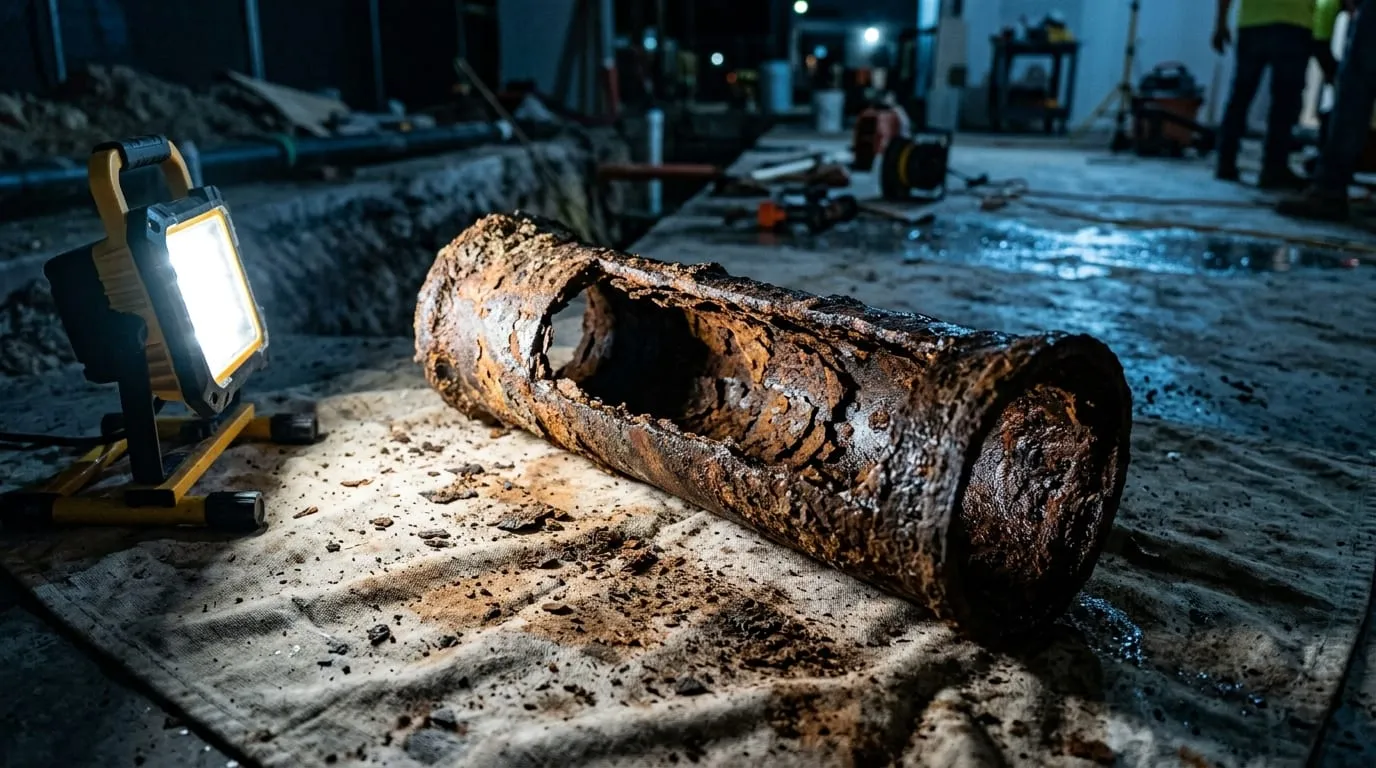
More than people expect. Municipal codes here typically require a permit to erect, install, enlarge, alter, repair, remove, convert or replace any plumbing system. That language is broad on purpose, and it captures a good deal that is casually treated as maintenance. Sewer line repair and replacement is permitted, inspected work. So, in most jurisdictions here, is a water heater replacement, because it touches life safety, energy compliance, pressure control and venting at once.
What generally does not require one is genuine repair of a fixture in place: a faucet cartridge, a flapper, a supply hose, a trap. The line falls roughly where alteration of the system begins, and where you are unsure, the building department will answer the question directly and it costs nothing to ask.
Why an unpermitted job is a problem later rather than now
Nothing happens at the time, which is exactly why it keeps happening. It surfaces at the point of sale, when a buyer or their inspector finds work with no record and an open question about whether it met code; at a later permit application, when an inspector encounters previous work that was never inspected; and at a claim, where an insurer asks what was done and by whom.
There is a second reason, less often mentioned. The permit and inspection process is the only independent check on the work. A contractor who prefers to skip it is removing the one part of the process that was not chosen by them.
Some cities layer on more
Coral Gables can involve historic preservation review alongside the building department and the county utility, which means three bodies on a single job. Boca Raton is known for unusually strict development codes. Several smaller municipalities contract parts of the process out or route utility questions to a neighboring provider. None of this is an obstacle when it is known in advance, and all of it is a delay when it is discovered halfway through. The city page for your address on this site names the authority for that municipality.
Questions
Common questions about plumbing permits
How do I find out whether I am in an unincorporated area?
In Miami-Dade, look at the folio number on your tax notice or on the property appraiser site: a folio starting with thirty means unincorporated county, and the county permitting process applies. Anything else means the city is your authority.
Does a water heater replacement really need a permit?
In most jurisdictions in this region, yes. It touches life safety, energy compliance, pressure control and venting simultaneously, which is why it is treated as permitted work rather than as a swap.
Who pulls the permit, me or the contractor?
A licensed contractor normally pulls it in their own name, and that is the arrangement you want, because it puts responsibility for the work with the person doing it. Be cautious about being asked to pull it as the owner instead.
What happens if previous work was never permitted?
It usually surfaces at a sale, at a later inspection, or at a claim rather than at the time. Jurisdictions here have processes for permitting existing work after the fact, and it is a far better position to resolve it deliberately than to have a buyer discover it.
Why is a county utility review needed as well as the city permit?
In Miami-Dade the county requires water and sewer department sign off on work that affects water or sewer service, and that is separate from the municipal building permit. On sewer and service line work, both apply.
Does the permit slow the job down a lot?
Less than the alternative usually costs. What actually causes delay is discovering the requirement partway through, particularly where a second body such as a utility or a historic board is involved, which is the argument for establishing the route before the work starts.
Related
What this connects to
The pages this article usually leads to.
Live dispatch · 24 / 7 / 365
Not sure which authority your address falls under?
It is a short answer once somebody knows the property, and it is worth having before the work rather than during it.
No obligation. Work performed under Florida plumbing contractor license CFC1433655.