
Two methods · the pipe decides
Trenchless or traditional sewer repair, and when each one is honest
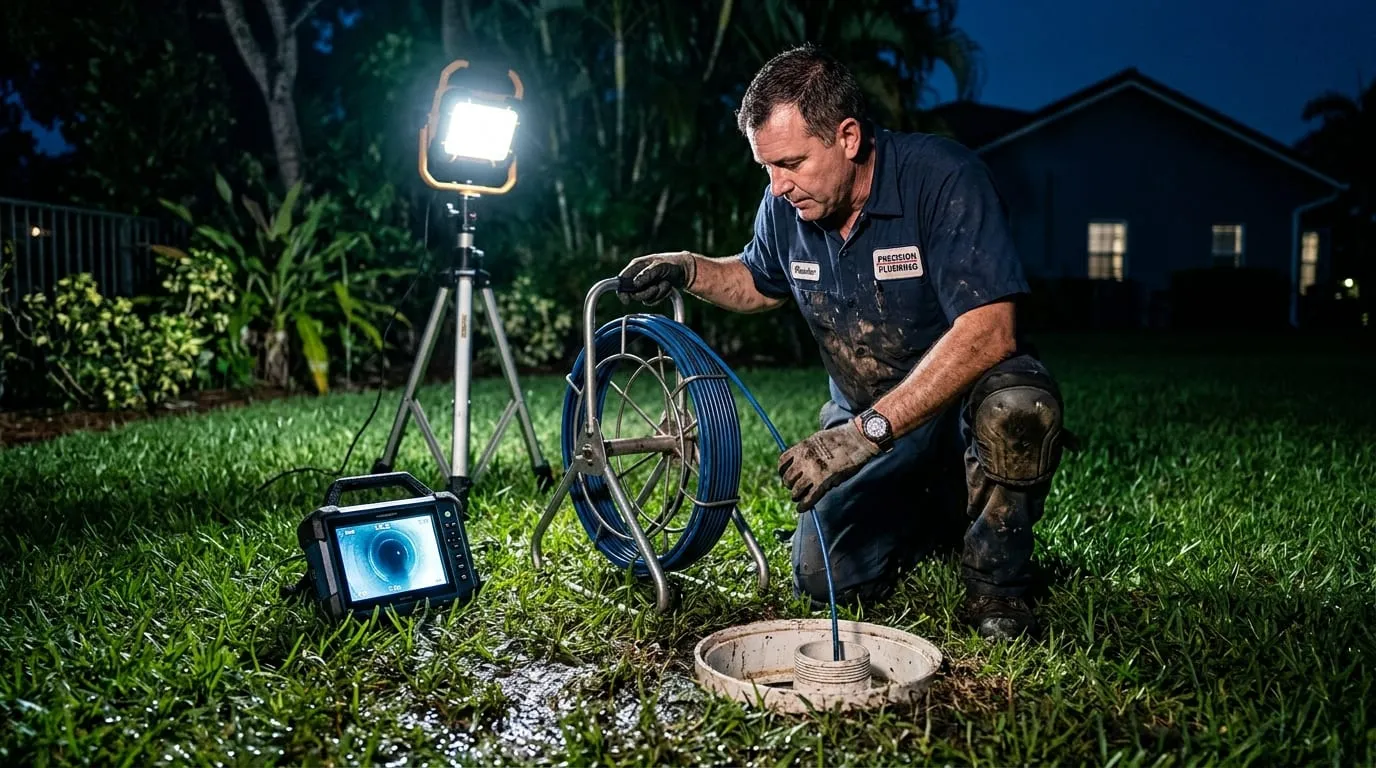
Lining needs a passage to work through. Where one still exists it avoids most of the demolition; where the pipe has collapsed or gone out of alignment, no liner will rebuild it, and saying so is the difference between advice and a sales pitch.
Which is better, trenchless or traditional sewer repair?
Neither, in the abstract. They address different conditions, and the condition of your line is a finding rather than a preference. That is why any answer offered before a camera has been down the pipe is worth very little.
Trenchless covers two techniques. Cured in place pipe pulls a resin coated liner through the existing pipe and cures it to form a new pipe inside the old one, with a manufacturer stated design life of around fifty years. Pipe bursting breaks the old pipe outward while pulling the new one through behind it, which suits a run that is too far gone to line but whose path is still usable.
Traditional replacement opens the ground or the slab along the run, takes the old pipe out and puts new pipe in. It is more disruptive and it is definitive, and there are conditions where it is the only method that actually works.
How to choose
What the camera finds, and what each finding rules in or out
The useful way to think about this is not method first but finding first. Each of these is something an inspection reports, and each one points somewhere.
Cracked, leaking or root damaged, with the bore still open
This is the case lining was designed for. The pipe has lost its integrity but its shape and path are intact, and a liner restores a continuous sealed interior without opening the ground. Root intrusion in particular is worth lining rather than repeatedly cutting, because roots come back through the same joints and here nothing goes dormant in winter to slow them down.
Collapsed, or badly offset at a joint
This rules lining out, and it is the point where a straight answer matters most. A liner needs something continuous to line. Where a section has caved in, or where two lengths have shifted so far that the bore steps sideways, there is no passage for the liner to be pulled through and no amount of preparation creates one. That is either pipe bursting, if the path is still workable, or excavation.
So blocked it cannot be cleaned or cabled through
Also a bar to lining, at least until it is resolved. The pipe has to be cleaned first, and if it cannot be cleared and cannot be cabled through, the liner has nowhere to go. Sometimes jetting resolves this and lining becomes available again, which is a sequence rather than a dead end.
Bad in one section, sound elsewhere
Worth separating out because it changes the size of the job rather than the method. A single failed length under a driveway is a very different proposition from a line that is uniformly thin over its whole length, and only an inspection distinguishes them. This is where a second opinion is most often worth having, in both directions.
What is specific to this ground
Sandy soil, a shallow water table and heavy seasonal rain move buried pipe here in ways that drier regions do not have to design around. Movement is what produces the offset joints that rule lining out, so a line that would have been a straightforward lining candidate a few years earlier may not be one now. Humid soil also corrodes cast iron faster than a drier climate does, which is why so many of these decisions arrive attached to a house built in the middle of the last century.
The questions worth asking before agreeing to either
- Can I see the footage? Not a summary of it. The recording is the evidence for whatever is being recommended, and it belongs to the job.
- Is the whole run being done, or a section? And if the whole run, what did the camera show in the parts that are not currently failing.
- What happens at the connections? Lining has to reinstate the points where branches join the main, and how that is done is a fair thing to ask about.
- What is the permit and inspection position? Sewer work is permitted work in these counties, and the answer should be immediate rather than improvised.
- What is restored afterwards? For excavation this is the part that dominates the disruption: slab, flooring, landscaping, driveway. It is a legitimate part of comparing the two.
The honest summary
Trenchless is genuinely less disruptive and it is the right answer for a large share of failures here. It is also promoted as universally better by people who only offer it, and it has a real boundary. If somebody recommends lining without having looked inside the pipe, or dismisses lining without having looked either, the problem in both cases is the same: a method chosen before the finding.
Questions
Common questions about trenchless repair
Does lining make the pipe narrower?
Slightly, because the liner has thickness and it sits inside the existing pipe. In practice the restored smooth bore usually flows better than the corroded and scaled surface it replaced, which is why the reduction is rarely the deciding factor.
How long does a liner last?
Manufacturers state a design life of around fifty years, which is comparable to what the original pipe was rated for. What matters as much is whether the line was a suitable candidate in the first place and whether it was prepared properly before the liner went in.
Can any sewer line be lined?
No, and this is the question worth pressing on. Lining needs an existing passage. A collapsed section, a badly offset joint, or a line that cannot be cleaned or cabled through first, all rule it out.
Is trenchless always cheaper?
Not always, and comparing the two only on the pipe work is misleading in either direction. Excavation carries the restoration of whatever was above the pipe, and lining carries preparation and access requirements of its own. What makes a comparison meaningful is that both quotes describe the same finished state.
Do I need a permit either way?
Sewer repair and replacement is permitted, inspected work in Broward and Miami-Dade regardless of the method, and in Miami-Dade work affecting water or sewer service also draws county utility review. A contractor who treats the permit as optional is telling you something useful about the rest of the job.
How do I know the work was done properly?
The same instrument that diagnosed it verifies it. A camera run after the work, recorded and handed over, shows the finished interior end to end. Asking for it up front is normal and it is much easier to arrange before the equipment leaves.
Related
What this connects to
The pages this article usually leads to.
Live dispatch · 24 / 7 / 365
Been told it has to be dug up?
Sometimes that is right and sometimes it is not, and the footage is what tells you which. A person answers at any hour.
No obligation. Work performed under Florida plumbing contractor license CFC1433655.