Polybutylene Pipe in South Florida Homes: How to Identify It
How to recognize polybutylene supply pipe in a Broward or Palm Beach home, which building years to check, and what your options are once you find it.
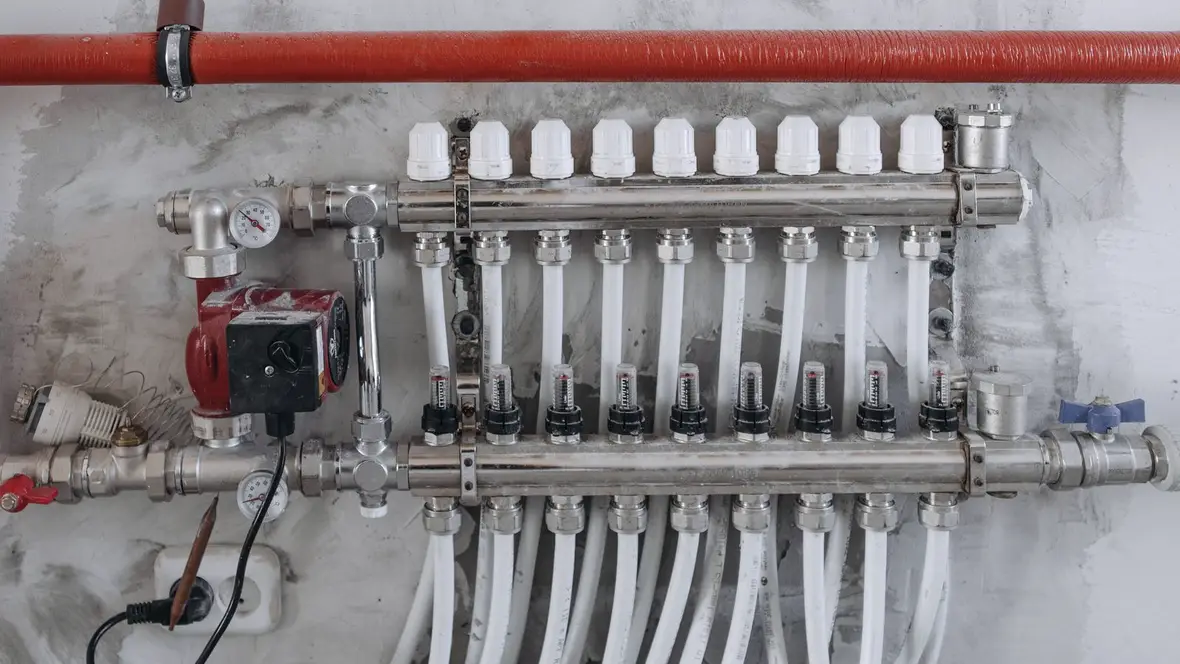
Polybutylene is a flexible plastic supply pipe that was installed in a great many American homes from the late 1970s to the mid-1990s. It is not a drain material — it carries pressurized potable water to the fixtures, which is precisely why its failures are disruptive.
South Florida has a lot of it, because the region's biggest suburban build-out lines up almost exactly with the years it was in use. If your house went up in Coral Springs, Pembroke Pines, western Plantation, Boca Raton or Delray Beach during that window, it is worth two minutes to check.
How to identify it
- Look where the supply pipe enters the water heater. This is the easiest place to see it, and it is usually visible without moving anything.
- Look under a bathroom vanity, at the pipe feeding the angle stops.
- If there is an accessible manifold or a laundry connection, look there too.
What you are looking for: flexible pipe rather than rigid, most often gray, sometimes blue and occasionally black, joined with crimped metal or plastic bands rather than soldered or threaded. Rigid copper, threaded galvanized steel and modern cross-linked PEX all look different. PEX in particular is easy to confuse with it at a glance — PEX is usually red, blue or white, and typically newer-looking, but where there is doubt the fittings and the markings on the pipe are what settle it.
Blue or black poly is also used for underground service lines in some installations, which is a different application. What matters for this question is the pipe distributing water inside the house.
How it fails
The characteristic failure is at fittings and joints, and it happens with little or no warning. Unlike copper, which usually gives you a sequence of small pinhole leaks that build a pattern over months, polybutylene tends to fail suddenly — and because it is a pressurized supply line, a failure keeps discharging until someone closes the main.
That asymmetry is the whole argument for acting early. A copper system tells you it is failing and gives you time to plan. A polybutylene system frequently does not, and it commonly fails when nobody is home.
Why South Florida has so much of it
- Coral Springs filled in rapidly through the 1970s and 1980s as a planned community, putting a large share of its housing squarely in the window.
- The western expansion of Pembroke Pines — Chapel Trail, Silver Lakes, Towngate — belongs to the same period.
- Most of Boca Raton's housing outside the historic pockets went up through the 1970s and 1980s.
- Jacaranda and the newer western sections of Plantation date from the 1980s.
- The earliest phases of the Weston area, including Bonaventure, predate the rest of that city by several years and fall closer to the window.
One consequence of building whole neighborhoods in eighteen-month bursts is that they age together. If two neighbors have had supply failures, that is genuinely information about your house.
What to do if you find it
The realistic options are to replace the system, replace part of it, or monitor it and accept the risk. Repairing individual failures as they occur is the least satisfactory of the three, because the failure mode is not localised to the fitting that went first.
A repipe replaces the distribution system in copper or PEX. Routing is planned to minimize wall and ceiling openings, isolation valves are added where they were missing, the new system is pressure tested before anything closes up, and then drywall is patched and finished to an agreed standard. The restoration standard is the thing to pin down in writing, because "patched" and "painted" are different prices.
Partial replacement is legitimate where the failures and the exposure are clustered rather than spread. What decides it is the layout and the history, not a rule.
Practical steps regardless
- Find your main shut-off and confirm it closes cleanly. If it does not, that is worth correcting on its own merits, and it matters far more in a house with this pipe.
- Show everyone in the household where it is and which way it turns.
- Photograph any leak, with the date. The pattern is what informs the decision.
- Ask your insurer what they need to know. Some carriers ask about supply pipe material directly at renewal.
- If you are buying, raise it during inspection rather than after closing.
Common questions
Is polybutylene still allowed?
It is no longer installed in new construction. Existing installations remain in service in a great many homes, which is why identification matters — and why it comes up during inspections and insurance renewals.
Can I just replace the fittings?
Partial measures are generally unsatisfactory here, because the failure mode is not confined to whichever fitting failed first. Where the exposure is genuinely localised a partial repipe can make sense; where it is throughout the house, it usually does not.
Copper or PEX for the replacement?
Both meet code and both are used here. PEX routes through existing construction with far fewer wall openings and has fewer joints; copper is rigid and familiar and preferred in some exposed runs. You should be given the reasoning for whichever is proposed for your house.
Keep reading